
Make room for a cat in a small apartment
We turn veterinary guidelines, published studies and makers’ spec sheets into numbers you can check with a tape measure, so you know what fits before you buy anything or move a single chair.
- Every number linked to its source
- Researched, not tested
- Measured for renters
Free tool
Measure before you buy
Pick what you are sizing up and type a number or two. The answer comes back against what vets and published studies say, drawn to scale, in inches or centimeters. Nothing you type is saved or sent.
- 27 in (69 cm)is the shortest box for a cat 18 in (46 cm) long, nose to tail base. Many store boxes are shorter than that.
- 2 boxesfor one cat, in two separate spots: one per cat, plus one.
- 1 to 2 in (2.5 to 5.1 cm)of litter suits most cats, with about 1.25 in (3.2 cm) as the floor.
- Over 3 ft (91 cm)posts went with less couch scratching in a survey of 4,105 owners.
- Full stretchis how long a shelf or perch should be, measured on your own cat.
What are you measuring?
Is the litter box long enough?
Starts at 18 in: grown cats average 18 to 20 in (46 to 51 cm) from the nose to the base of the tail, says Britannica. Type your own cat’s length for a real answer.
How to measure your cat
While the cat stands, run a soft tape from the tip of its nose along the back to where the tail starts, not to the tail tip. No soft tape? Lay a piece of string along the same line, then measure the string. Take two readings and use the longer one.
Box at least 27 in long (69 cm)
Next: keep that box from smelling in a small space
Next: litter boxes long enough for your cat
The rule: a box one and a half times the cat’s length or more, from the AAFP and ISFM house-soiling guidelines (2014). Many boxes sold in stores are shorter.
How many litter boxes do you need?
2 boxes in two different spots
Next: where each box can go in a small apartment
Next: litter boxes for two or more cats in a small home
One box per cat plus one, each in its own spot: a rule of thumb from the AAHA and AAFP life stage guidelines (2021), which the AAFP and ISFM (2014) say is not an absolute requirement. Two boxes side by side count as one.
Is there enough litter in the box?
2 in of litter (5 cm)
Next: the types of litter compared, by weight and dust
Next: lightweight litter, and the pounds you carry upstairs a month
Next: bags and cost a month for every box, in the cat litter calculator
About 1 to 2 inches suits most cats (Cornell Feline Health Center); the AAFP and ISFM put the floor at about 1.25 in (3 cm). The full change every 1 to 2 weeks is where the clumping litter guidelines overlap.
Is the scratching post tall enough?
30 in tall (76 cm)
Next: scratching posts that clear 3 ft, and the bases that hold them
Next: small cat trees compared by footprint and height
From Wilson and colleagues (2016), a survey of 4,105 cat owners for the Journal of Feline Medicine and Surgery. Owners reported it; nobody tested it, so read it as a pointer, not a rule.
Can your cat stretch out on the shelf?
Starts at 30 in, an example for a grown cat lying fully stretched: we found no source that gives an average paw to paw, so measure your own cat.
6 in short
Next: no-drill perches and shelves long enough for your cat
Next: window perches and shelves you can fit without drilling
A perch should let a cat stretch out fully, in length and in width, says the AAFP and ISFM environmental needs guidelines (2013). Measure your cat while it lies fully stretched, from the tips of its back paws to the tips of its front paws; the tail can hang over the end.
Start from the problem
What’s the problem?
Pick whatever sounds most like your week. You get the guide to read first, then a tool and a topic page to keep open beside it.
The litter box smells
Fix the routine before you buy anything: daily scooping and a regular full wash do most of the work.
Start with stopping litter box smell at the source
- Cleaning tracker, a printable for scooping and full changes
- Smell and cleaning, every guide on the subject
No room for a cat tree
Look at the base before the height, since the base is what your floor gives up. Shelves and window perches add height with no base at all.
Start with small cat trees, base against height
- Space-fit planner, to try a base on your floor
- Small space, with shelves for renters and room layouts
The cat goes for the couch
Give it somewhere better to scratch, right beside the spot it already uses: a sturdy post tall enough for a full stretch.
Start with moving the scratching from the sofa to a post
- Scratching posts compared, by height and base
- Cat measuring tool, to check a post against your cat
A bored cat
A bored indoor cat is often missing one step of a hunt: something to stalk, chase, catch and then eat.
Start with toys for bored cats, matched to the hunt
- Enrichment plan builder, a week of play from the toys you own
- Puzzle feeders compared
Going away for a few days
No vet body we read sets a safe number of days alone, so plan around a sitter’s visits rather than a time limit.
Start with leaving a cat alone: what the sources say
- Weekend-away cost calculator, sitter or boarding side by side
- Weekend-away checklist and the cat-sitter sheet
A new cat is coming
Ready one small room first; the rest of the home can open up once the cat settles.
Start with the new cat checklist and what to buy
- Cat measuring tool, to size the box from your cat’s length
- The 3-3-3 rule, for the first days, weeks and months
Adding a second cat
Two cats usually mean three litter boxes in three separate spots, each sized for the longer cat.
Start with litter boxes for two cats
- Introducing the cats, when the only spare room is the bathroom
- Cat measuring tool, which counts boxes for up to six cats
Renting, or moving out
Choose things that come down without a trace: no drilling, and nothing stuck to the walls.
Start with renting with a cat, every renter guide in one place
- Shelves and perches that need no drill
- Space-fit planner, to plan the room before you move in
- Moving and travel, on the care page
Six topics
Pick a topic
Litter
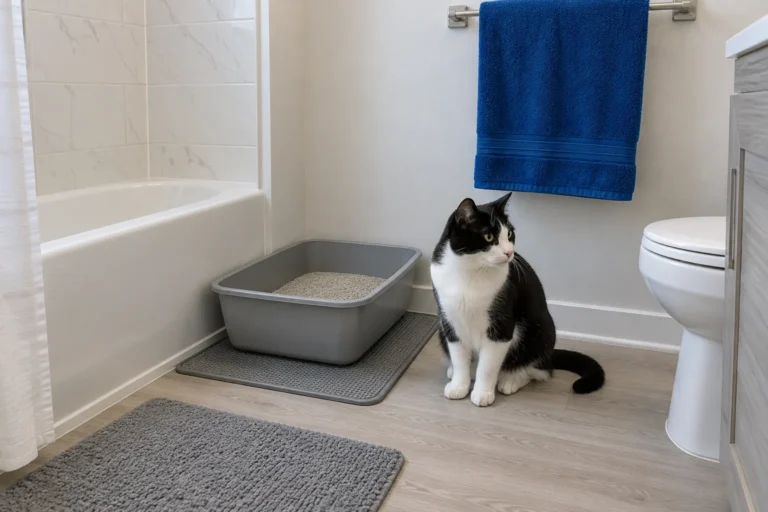
Box size, how many boxes, where they fit in a studio, and which litter keeps the smell down. Most small-home trouble starts here.
Small space
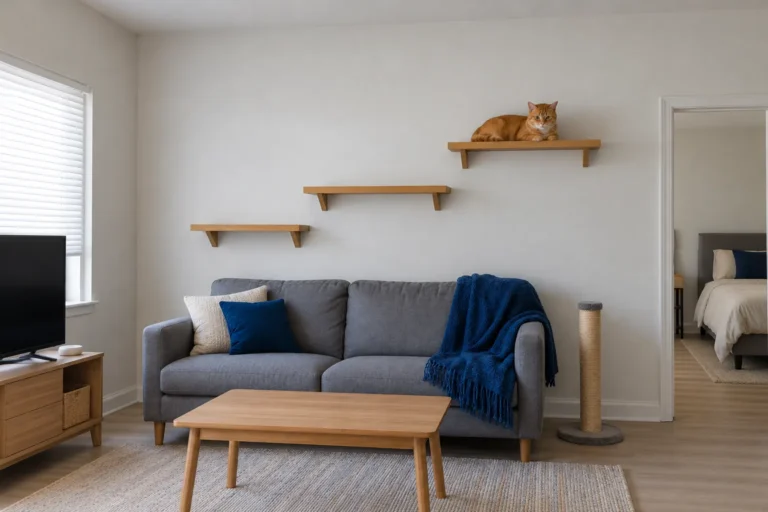
Cat trees, wall shelves, window perches and scratchers that suit a rental and its lease.
Feeding and water
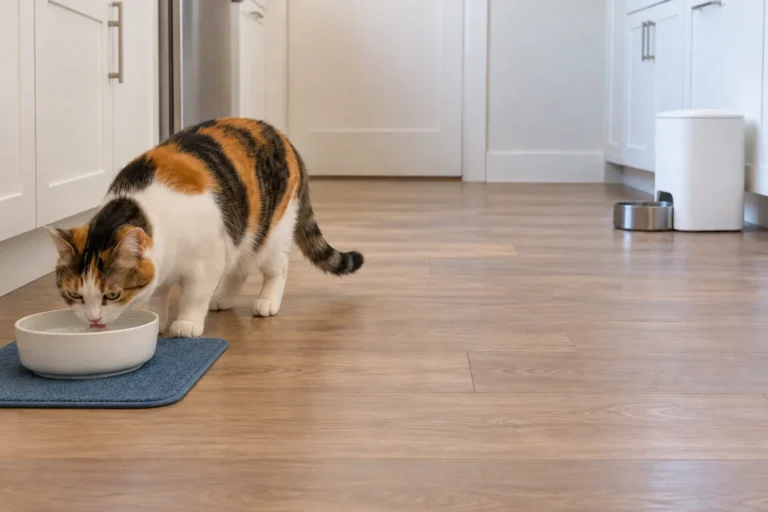
Feeders, fountains and bowls, with the footprints and filter costs their makers publish.
Recently published
Latest guides
-
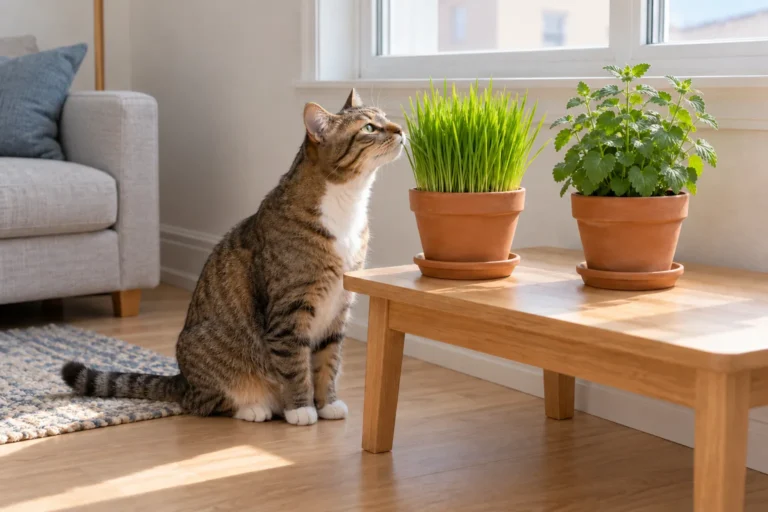
EnrichmentCatnip and cat grass
Growing catnip and cat grass on a windowsill
How to grow cat grass and catnip in pots on a small apartment windowsill, and keep the cat off the seedlings until they are ready.
10 min readUpdated
-
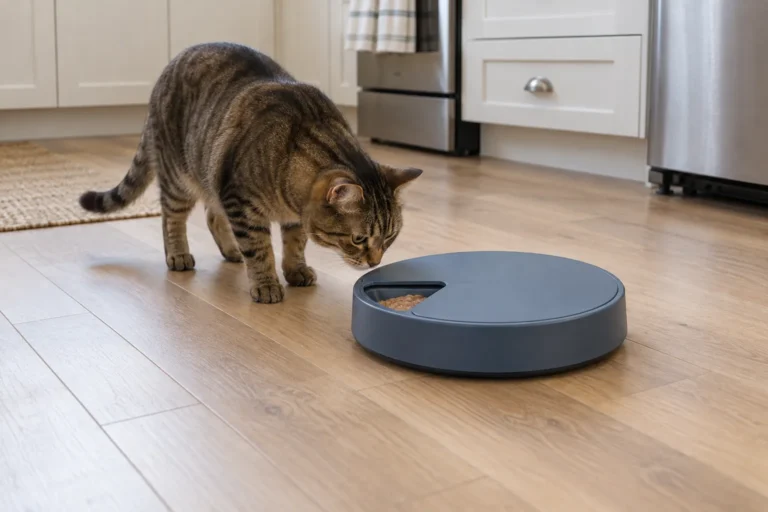
Feeding and waterAutomatic feeders
Automatic cat feeders for wet food: what the specs mean
Ice packs fade within hours and no feeder here holds fridge temperature. Choose by meals per day, power and cleanup: the Cat Mate C500, C200, Catit PIXI or Polar.
11 min readUpdated
-
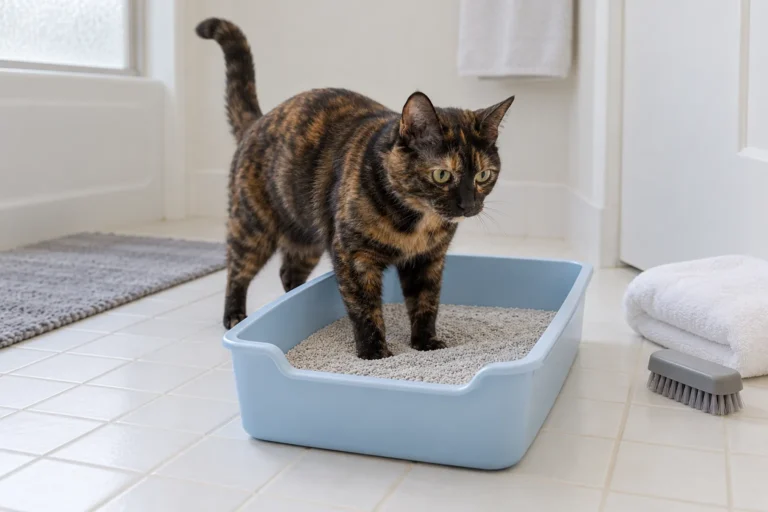
LitterSmell and cleaning
How to clean a litter box, and how often
The daily scoop and the full wash, done in an apartment with no yard or hose, plus what never to wash a litter box with.
9 min readUpdated
-
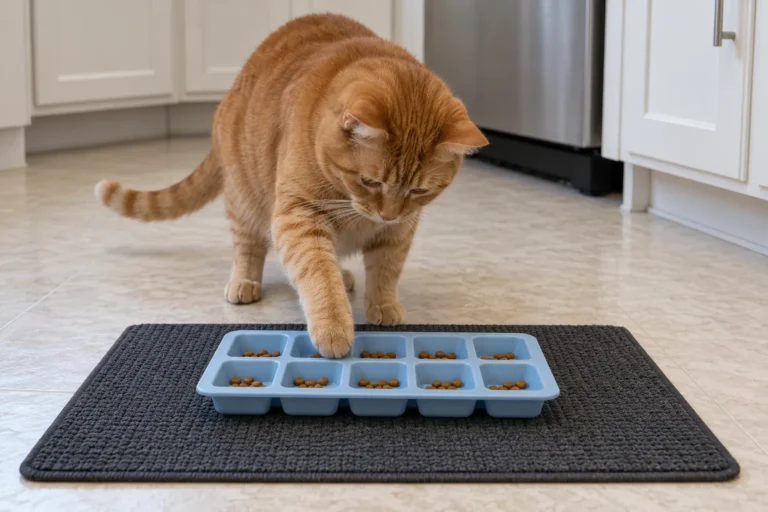
EnrichmentPuzzles and DIY
DIY cat puzzle feeders: three easy builds for beginners
Three beginner food puzzles from things already in the kitchen: an ice tray, an open egg carton and a taped tube pyramid, plus how to introduce and clean them.
9 min readUpdated
-
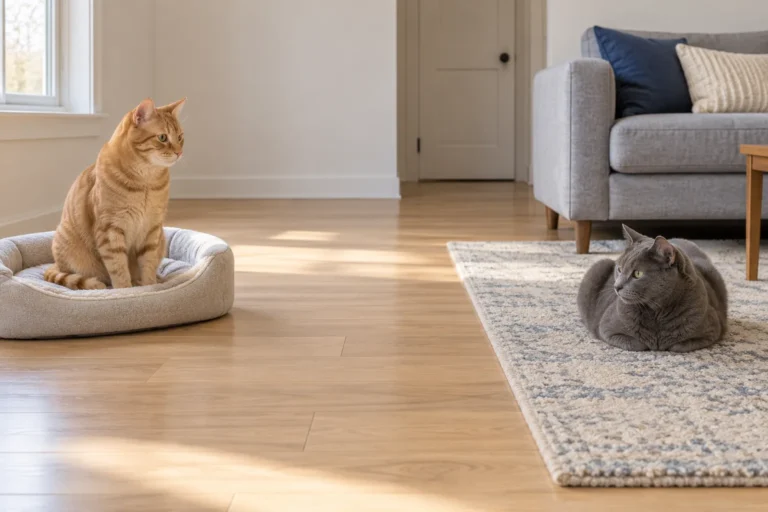
CareNew cat at home
How to introduce a new cat to your cat in a small apartment
Five steps for introducing a new cat to your cat when the only spare room is the bathroom, and the signs that mean slow down.
10 min readUpdated
-
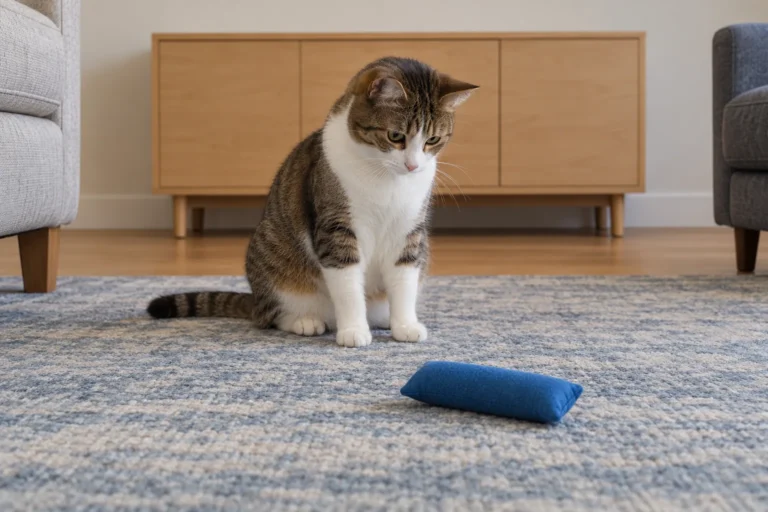
EnrichmentPlay and routines
Signs a cat is bored, and what to change in a small home
The signs Cats Protection lists, why the vet comes first, and the free changes that work in an apartment: hunt-style play, fewer toys, a place to retreat.
8 min readUpdated
First weeks
New cat, small home: the first four moves
- Give it one small room to start, with food and water away from the litter box and a hiding spot you can get to.
- Plan on a slow settling-in. Shelters expect about 3 days of decompressing, 3 weeks of learning the routine and 3 months before a cat feels settled.
- Buy two litter boxes, even for one cat. Veterinary guidelines count one per cat plus one.
- Leave the carrier out from day one, so it is a familiar bed by the time of the first vet visit.
Print the new cat checklist before adoption day, then follow the 3-3-3 rule guide through the first months. Start here sorts the rest by situation, from a cat hiding under the bed to a walk-up full of litter bags, with a setup list you can tick off.
Our method
How we research
Every number on these pages links to where it came from: a veterinary guideline, a published study or the maker’s own spec sheet, with the date we read it. We do not test products, and every page that names one says so at the top. When the evidence is thin or the experts disagree, the page tells you that as well.