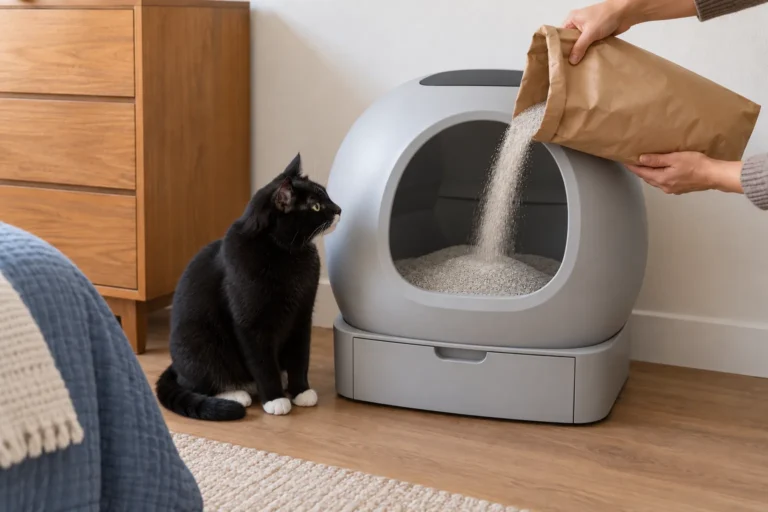

Cleaning a litter box is two jobs: scooping out clumps and stool at least once a day, and a full empty-and-wash that veterinary guidelines space anywhere from one to four weeks apart. In an apartment the second job is the awkward one. There is no yard, no hose, and the only big basin may be the tub you shower in.
This page is the how-to. If the box smells even when it is clean, our litter box smell guide takes that problem apart.
What you need
- Disposable gloves.
- A slotted scoop, plus small bags or a lidded pail for the clumps.
- Mild, unscented dish soap and a brush or sponge that never touches anything else.
- An old towel.
- Fresh unscented clumping litter.
- Ideally a second box, so your cat has one while the first is drying.
Cleaning a litter box, in short
Scoop every day, twice if you can, bag the waste for the trash and top up the litter. On the full-wash day, set out a second box, bin the old litter, wash the box in a laundry sink or the tub with hot water and at most a mild unscented soap, dry it and refill it. Skip bleach and anything strongly scented.
Key takeaways
- Scoop at least daily (twice is iCatCare’s ideal); Cornell says anyone pregnant or with a weakened immune system should not clean the box. → the daily scoop
- With clumping litter, three of the four sources giving a number overlap at a full wash every 1 to 2 weeks. → how often to wash
- Never wash the box where food is prepared (San Diego Humane Society); use a laundry sink, or a tub you scrub afterward. → where to wash it
- Skip bleach, ammonia, vinegar and citrus on the box; Cornell notes that ammonia and vinegar smell like urine to a cat. → what not to use
- Odors eventually seep into plastic, so replace a box that smells when clean and empty, or has cracked (Nebraska Humane, Cornell). → when to replace it
Every day: scoop, bag, top up
The AAFP and ISFM house-soiling guidelines set the floor: take out waste at least once a day and add litter as needed. The 2025 iCatCare consensus calls twice a day ideal, and some cats will not use a box that still holds waste. Cats eliminate about three to five times daily, those guidelines note, so a box scooped only at night has had a busy day.
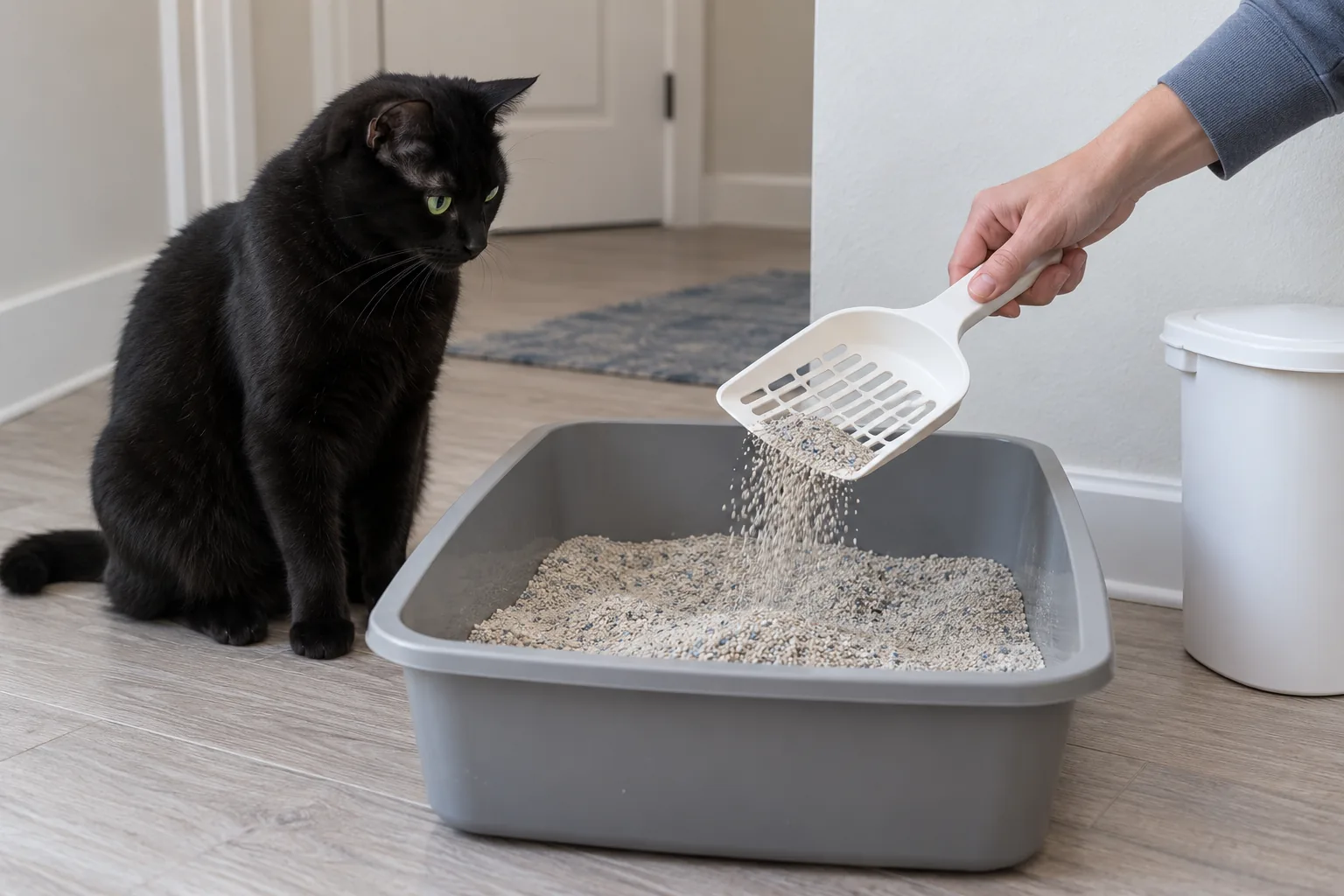
- Lift each clump out whole, and run the scoop along the corners and walls, where urine clumps stick.
- Shake loose litter back through the slots.
- Drop the clumps into a bag, knot it and bin it. San Diego Humane Society advises against flushing any litter, flushable kinds included.
- Top up to about 1 to 2 in (2.5 to 5.1 cm), the depth Cornell’s Feline Health Center says most cats like.
- Wash your hands.
A lidded pail beside the box saves a trip downstairs after every scoop; our litter disposal bins comparison measures how much floor each one needs.
Pregnant, or with a weakened immune system? Cornell’s Feline Health Center says such people should not clean the litter box. For everyone else, it advises gloves and a hand wash afterward, and stresses that daily scooping matters: the toxoplasma eggs in cat feces take at least 24 hours to become infective. Your doctor or midwife can say more.
How often to empty and wash the whole box
Scooping never gets everything, so the whole box needs emptying and washing on a schedule. The sources do not agree on one:
- AAFP and ISFM: wash every 1 to 4 weeks; some behaviorists prefer weekly.
- iCatCare: every 1 to 2 weeks.
- Nebraska Humane Society: about every two weeks, with mild dish soap.
- San Diego Humane Society: roughly monthly for clumping litter, but every 2 to 3 days for non-clumping litter, since only solids can be scooped out of it.
- Cornell: no fixed interval; change the litter often enough that it looks and smells dry and clean, and more often with more cats.
Three of the four that give a number meet at one to two weeks for a clumping litter, a sensible default for one cat in a small home. Mark the day in our free litter box cleaning tracker, and move it earlier when the box smells before it is due.
Step by step: the full wash in an apartment
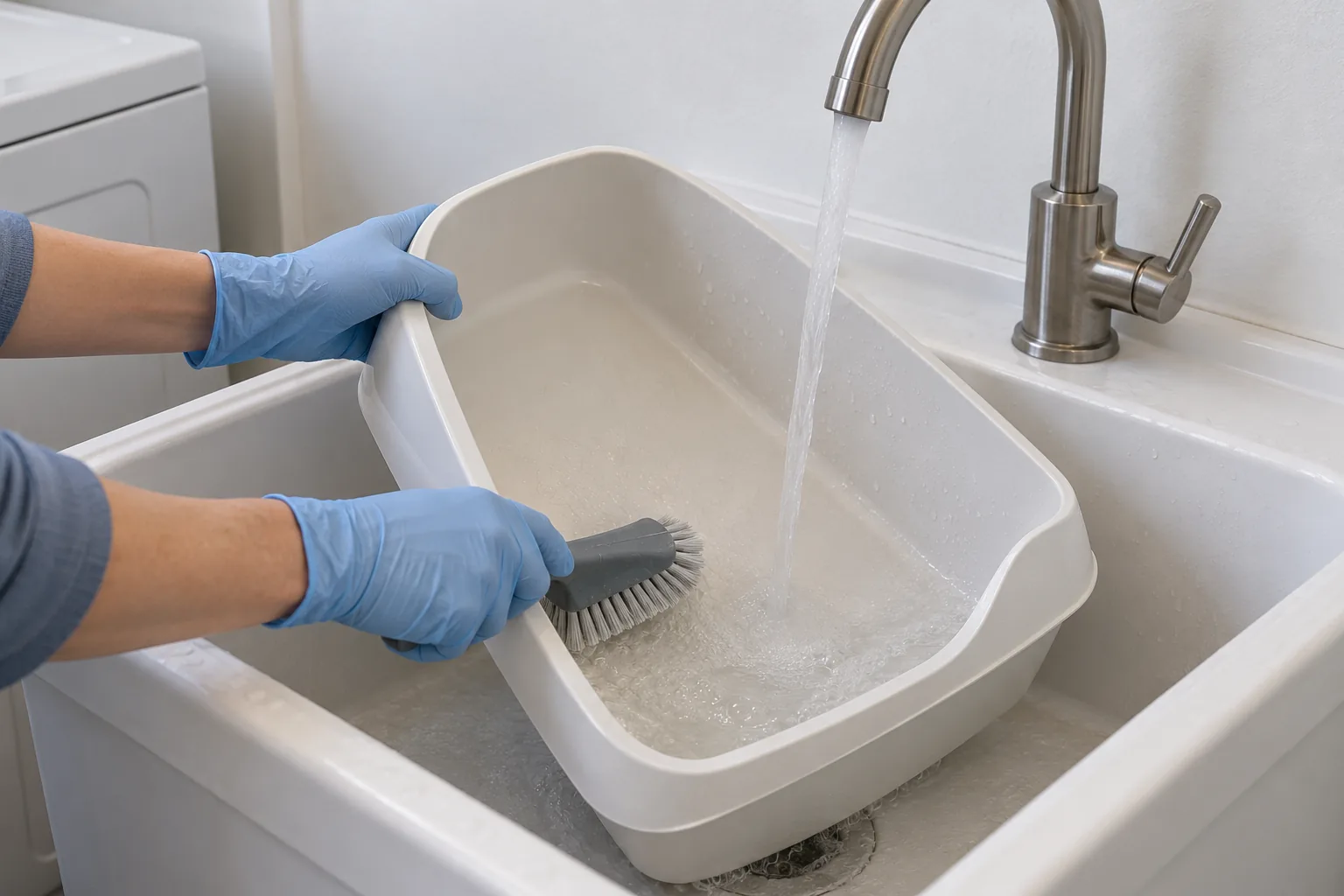
Where to wash is the real apartment question. San Diego Humane Society is clear on one point: never where you prepare food, so not the kitchen sink. A laundry sink is its first choice; the bathtub works if you scrub that area down afterward.
- Fill the second box first and set it down, so your cat is never without one.
- Put on gloves. Tip all the old litter into a thick bag, knot it and take it out.
- Carry the empty box to the laundry sink or the tub.
- Wash it with hot water, and soap only if you choose to (the sources split on it, below).
- Scrub the floor of the box, the corners and the inside walls with the brush you keep for this job.
- Rinse until neither the water nor the plastic smells of anything.
- Dry it inside and out with the towel, or let it air-dry.
- Refill with 1 to 2 in (2.5 to 5.1 cm) of fresh unscented clumping litter.
- Clean the tub, wash the scoop and brush, then your hands.
On soap, the guidelines split three ways. AAHA and AAFP’s 2021 guidelines say to avoid it and use hot water alone; the AAFP and ISFM accept soap and hot water; a mild detergent is what Cornell and iCatCare recommend. They agree that nothing strong-smelling belongs on the box, and a soap you cannot smell is still one your cat may notice, so rinse well.
What not to wash a litter box with
One of the pages ranking for this search is a bleach maker’s guide to disinfecting the box with bleach. The veterinary guidance runs the other way: no bleach, ammonia, citrus or other strong-smelling cleaners on the box. Cornell warns against ammonia and vinegar on soiled spots because both smell like urine to a cat; keep them off the box as well. San Diego Humane’s bleach solution is for the tub after the box has gone, not for the box.
Leave out the add-ons as well. The AAFP and ISFM advise against plastic liners, slotted grills and deodorizing powders, which many cats dislike, and essential-oil sprays have no place near a cat: the Merck Veterinary Manual explains that cats’ livers clear some oil compounds poorly.
If your cat avoids the clean box. A new smell can put a cat off, so rinse again and go back to plain hot water. If the cat still goes elsewhere, see your vet: Cornell lists urinary tract inflammation, kidney and thyroid disease and diabetes among the medical causes of litter box problems. A cat that strains and passes little or no urine needs a vet at once, because Cornell calls a urethral blockage an absolute emergency.
The scoop, the mat and the floor around the box
Wash the scoop and the brush with the box, so they do not carry old waste back into fresh litter. A mat in front of the box catches the grains that ride out on paws; our litter mat comparison covers sizes for a bathroom corner. If urine ever lands outside the box, Cornell’s advice is to clean it soon and to neutralize the odor rather than cover it, because cats return to spots that still smell of them.
When to replace the box
Plastic wears, and scratches hold odor. Cornell says to replace an old box that smells or has cracked. Nebraska Humane Society notes that odors eventually seep into the plastic for good, so if the clean, empty box smells to you, it is time. San Diego Humane Society puts the usual lifespan at six months to two years, and says a box is done once waste starts to build up on its floor.
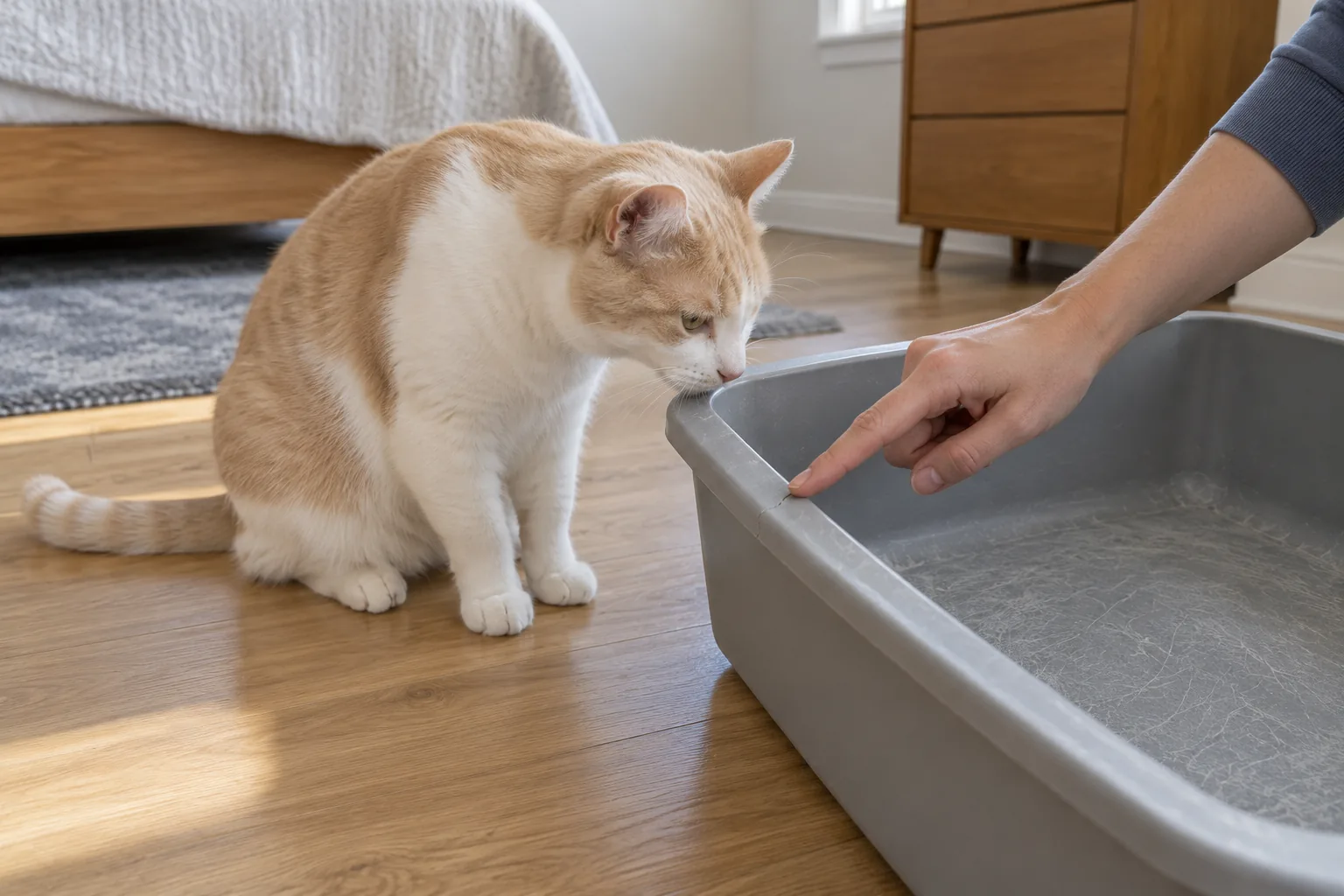
Buy the replacement big enough: the AAFP and ISFM guidelines want a box at least one and a half times your cat’s length, nose to the base of the tail. Our large litter box comparison lists the ones that clear that bar.
Questions about cleaning a litter box
How often should a litter box be scooped?
At least once a day, by every veterinary guideline we read, and twice a day if you can manage it, as the 2025 iCatCare consensus prefers. If you work long days, scoop before you leave and again when you get home; a cat that finds the box dirty may look for somewhere else.
Is dish soap safe for washing a litter box?
A mild, unscented dish soap fits the advice of iCatCare, Cornell and the AAFP and ISFM, while the AAHA and AAFP guidelines prefer hot water with no soap at all. Whichever you choose, skip scented formulas and rinse until the box smells of nothing, since a lingering perfume can put a cat off.
Why do vets not recommend closed litter boxes?
Mostly because an open box is easier to check and keep clean, which is why the AAFP and ISFM favor it, and Cornell says most cats prefer one. In the one controlled study, 28 cats split their visits about evenly between large covered and open boxes, as long as both were scooped daily. Cleaning counted for more than the lid.
Can I wash a litter box in the bathtub?
If there is no laundry sink, San Diego Humane Society says the tub will do, as long as you scrub it down afterward; it suggests a bleach solution for that step. What it rules out is anywhere food is prepared. Rinse the tub well and keep your cat out of the bathroom until it is dry.
Which box does a cat use while its litter box dries?
Its second box. The AAHA and AAFP guidelines count one box for each cat and one extra, so even a single cat should have two, in two different spots. Fill and set out the spare before you empty the first; with two cats, the third box covers wash day the same way.
Next step. With the daily scoop settled, compare the litter disposal bins that hold the clumps between trips to the trash.
Sources
- AAFP and ISFM, “Guidelines for Diagnosing and Solving House-Soiling Behavior in Cats,” Journal of Feline Medicine and Surgery, 2014, journals.sagepub.com, read Oct 16, 2026.
- International Cat Care, “2025 iCatCare consensus guidelines on the diagnosis and management of lower urinary tract diseases in cats,” 2025, PubMed Central, read Oct 16, 2026.
- Cornell Feline Health Center, “Feline Behavior Problems: House Soiling,” vet.cornell.edu, read Oct 16, 2026.
- AAHA and AAFP, “2021 Feline Life Stage Guidelines: general litter box considerations,” aaha.org, read Oct 16, 2026.
- San Diego Humane Society, “Litter Boxes 101,” sdhumane.org, read Oct 16, 2026.
- Nebraska Humane Society, “Litter Box Set-Up,” nehumanesociety.org, read Oct 16, 2026.
- Cornell Feline Health Center, “Toxoplasmosis in Cats,” vet.cornell.edu, read Oct 16, 2026.
- Cornell Feline Health Center, “Feline Lower Urinary Tract Disease,” vet.cornell.edu, read Oct 16, 2026.
- Grigg, Pick and Nibblett, “Litter box preference in domestic cats: covered versus uncovered,” Journal of Feline Medicine and Surgery, 2013, PubMed, read Oct 16, 2026.
- Merck Veterinary Manual, “Toxicoses From Essential Oils in Animals,” merckvetmanual.com, read Oct 16, 2026.