

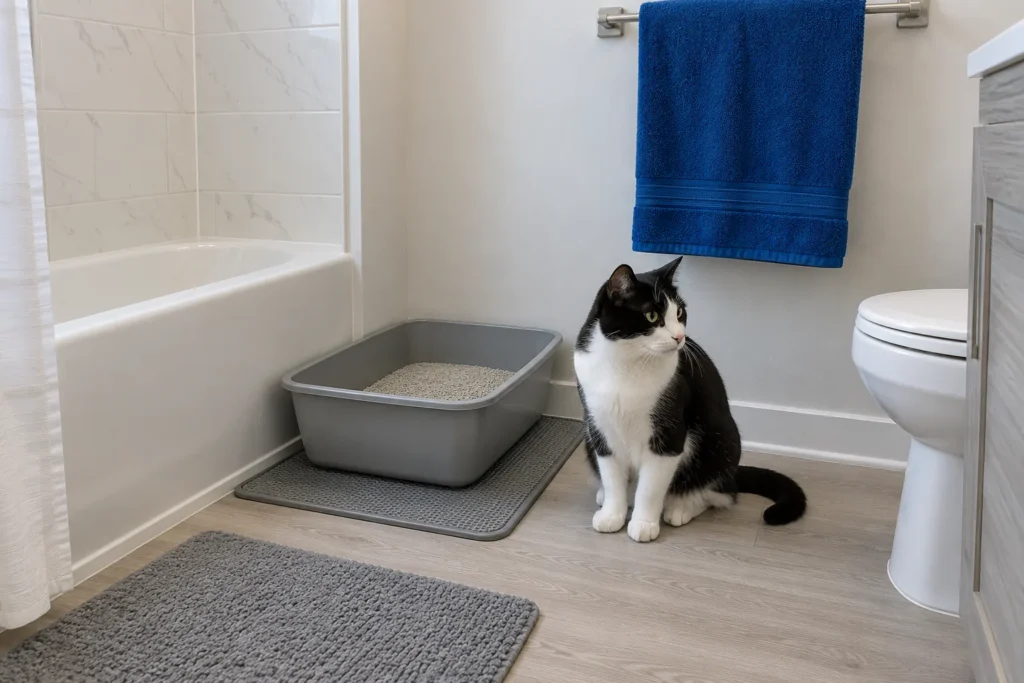
A cat litter box takes more floor than most new owners expect, and in a small apartment it usually lands in the bathroom, a closet or a corner of the living room. These guides cover the size, the number of boxes, the litter and the cleaning routine that keep that corner clean and the cat using it.
Start with three numbers
- One box per cat, plus one. A single cat gets two boxes, each in its own spot (AAHA and AAFP, 2021).
- At least 1.5 times your cat’s length, measured from the nose to the base of the tail. Most boxes in pet stores are shorter than that, so measure the cat before you shop (AAFP and ISFM, 2014).
- Scoop once a day, at minimum. Twice is better. Some cats will not step into a box that still holds waste.
If you read one guide first, make it the litter box placement guide. In a studio the spot you have sets the size and style of box that can work, so the spot comes before the shopping.
What is the litter problem in your home?
Pick the one that sounds like yours for a short answer and the guide that goes deeper.
The box smells
Check the scooping and the box before the litter. Cornell notes that a lid keeps odor in for the cat rather than away from you, and veterinary guidelines advise against scented litter and deodorizers.
Start with the guide to litter box smell
- Odor-control litters and what each maker claims
- Bins and systems for used litter
- Cleaning the box and how often to wash it
Litter ends up all over the floor
A few kicks on the way out are normal. A cat behaviorist quoted by PetMD says a cramped box can make a cat dig harder, and litter under about 1.5 inches (3.8 cm) deep can mean more kicking.
Start with litter mats compared by size and material
- Large litter boxes, if the cat is cramped in its box
Every bag goes up the stairs
In a walk-up, weight is a fair way to compare litters, because you carry every pound of it home. The lighter types trade some clumping or dust claims for it.
Start with lightweight litter for apartment stairs
- All litter types by weight and listed dust
- The cat litter calculator totals the pounds you haul home each month
Thinking about a self-cleaning box
No veterinary guideline or study takes a side on self-cleaning boxes, so the guides stick to footprint, clearance and the maker’s own figures. Most units need a clumping litter, which narrows your choice.
Start with Litter-Robot 3 vs 4, spec by spec
Two cats, one small home
Two cats call for three boxes in three separate spots, which is the hard part in a one-bedroom. Spread them out so one cat cannot guard them all.
Start with litter boxes for two cats
A long or heavy cat
Size the box from the cat, not the label: one and a half times its length from nose to tail base. Many boxes sold as large fall short of that for a big cat.
Start with large and extra-large litter boxes
- The cat measuring tool gives the box length from your cat
The cat goes outside the box
Call the vet before you move a single box. Illness and pain often show up this way first; once the vet has ruled them out, look at the spot, the size and the litter, one change at a time.
Then read the placement guide
Litter types
Clay, silica crystals, pine, walnut, corn, wheat, tofu and paper each clump, absorb or dry out in their own way, and they differ a lot in weight, which you feel carrying a month’s supply up to a fourth-floor walk-up. Veterinary guidelines say most cats prefer a fine, sand-like, unscented clumping litter, so the comparisons start there and show what each alternative trades away.
-
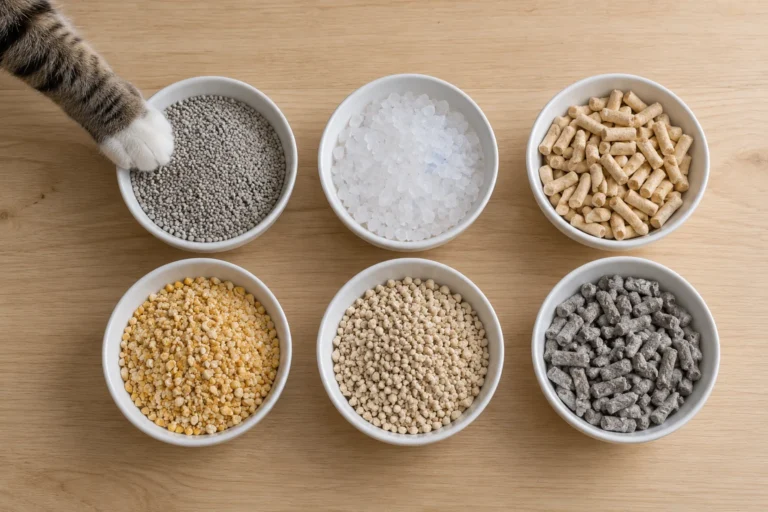
Types of cat litter compared: weight and listed dust claims
Nine litter types side by side: what each is made of, whether it clumps, bag weights and what each maker claims about dust.
14 min readUpdated
-

Odor-control cat litters compared: what each maker claims
Eight odor-control litters side by side: the odor technology each maker names, the days it promises, and whether any test stands behind the number.
14 min readUpdated
-
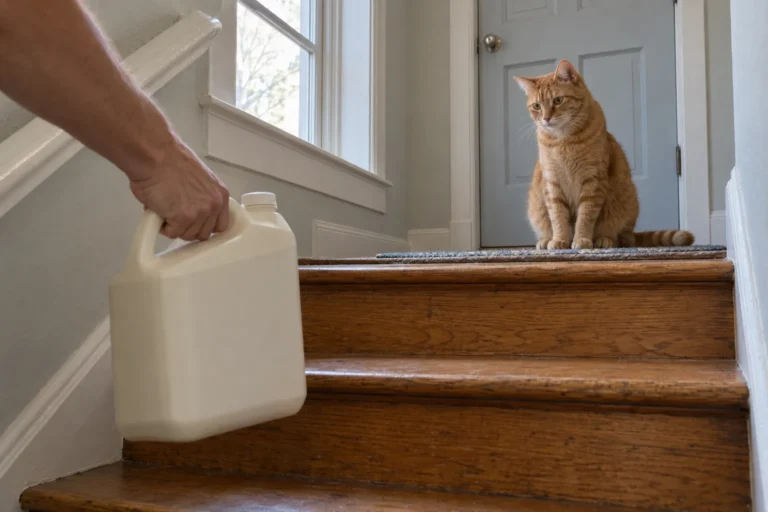
Lightweight cat litter for apartment stairs
Lighter litters by their makers’ own claims, and the arithmetic for how many pounds one cat’s box sends up your stairs each month.
13 min readUpdated
-
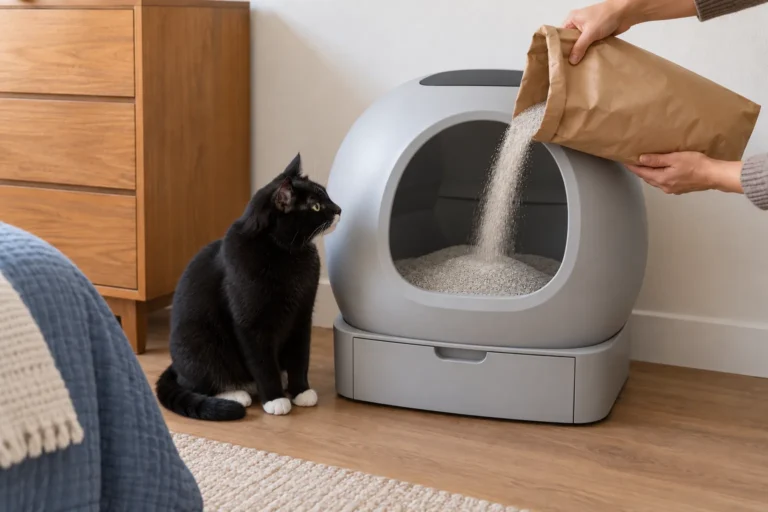
What litter to use in an automatic litter box
What each self-cleaning box maker says about litter, the litters that meet those rules, and how much a month you carry upstairs.
14 min readUpdated
-

Eco-friendly cat litters compared: walnut, corn, wheat, grass and paper
Six plant and paper litters side by side: what each is made from, what the green words on the bag cover, and where the used litter goes.
14 min readUpdated
Every litter type, compared on one page
Cat litter box styles and sizes
Open trays, covered boxes, top-entry boxes, corner boxes, furniture enclosures and self-cleaning units all compete for the same few square feet. In the one controlled study on lids, cats used large covered and open boxes about equally when both were scooped every day, so length and cleaning matter more than the cover. No veterinary guideline takes a position on self-cleaning boxes; the guides on them stick to footprints, the clearance around them and what each maker publishes.
-

Large and extra-large litter boxes for big cats
Five large litter boxes compared by length and floor space, which cat each one fits by the 1.5 times rule, and longer DIY options.
13 min readUpdated
-
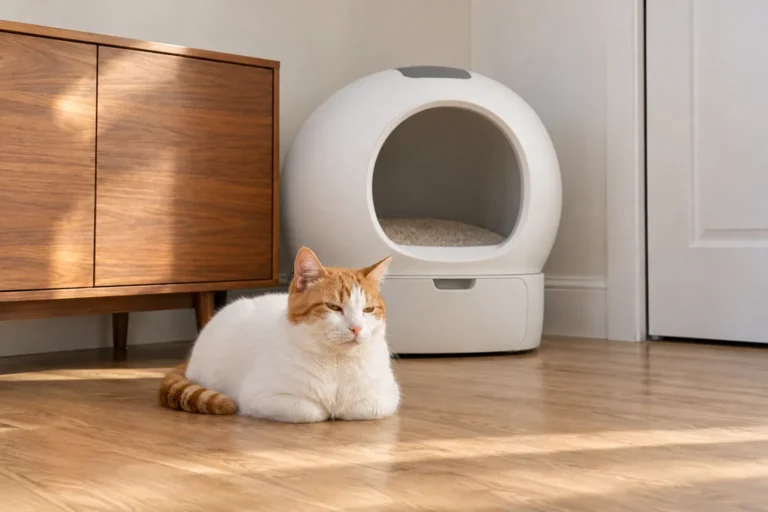
Litter-Robot 3 vs 4 vs 5: specs compared for small homes
The Litter-Robot 3 Connect and 4 side by side, with the EVO and 5: size, cat weights, Wi-Fi, outages and fit in a small home.
12 min readUpdated
All the litter box guides in one place
Smell and cleaning
Daily scooping does most of the work against odor. With clumping litter, empty and wash the whole box about every 1 to 2 weeks, sooner if it smells or stays damp. Hot water and, if needed, a little mild dish soap are enough; leave bleach, ammonia and citrus cleaners out of it. The same guidelines advise against scented litter, deodorizers and plastic liners, because many cats dislike them.
-
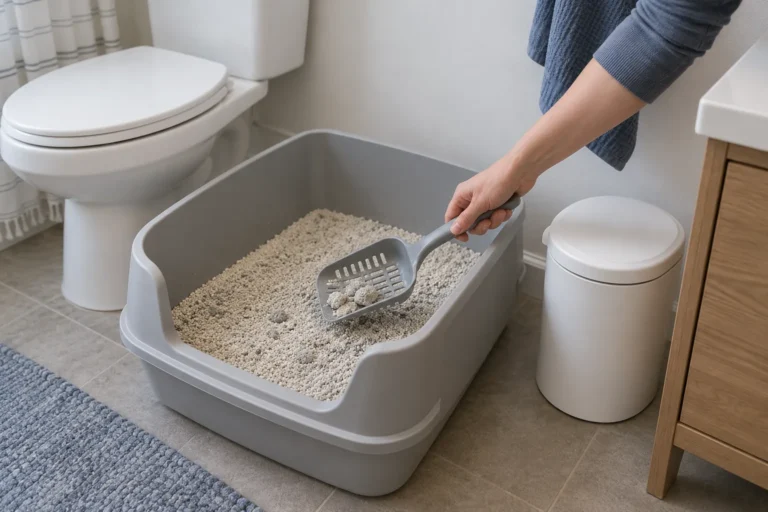
How to keep a litter box from smelling in a small apartment
The daily and weekly routine that holds litter smell down in a studio, what to wash the box with, and which odor products cats dislike.
14 min readUpdated
-
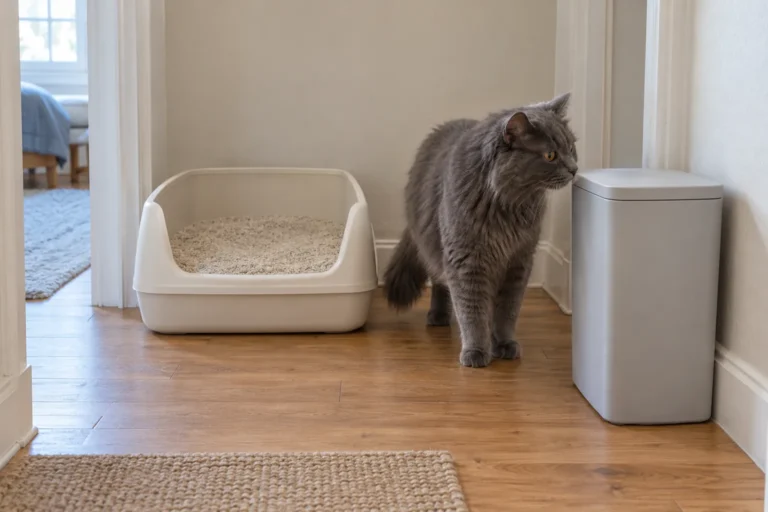
Litter disposal in an apartment: bins and systems
Seven litter disposal bins compared for small homes: how much floor each takes, how many days a bag holds, and how long each refill lasts.
13 min readUpdated
-
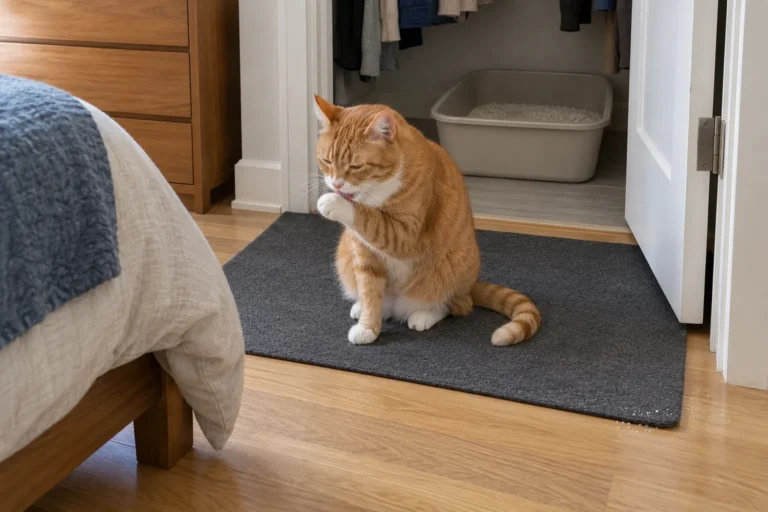
Litter mats compared: sizes and materials
Five litter mats from four makers compared by size, material and thickness, with how to wash each one in an apartment without a laundry room.
13 min readUpdated
-
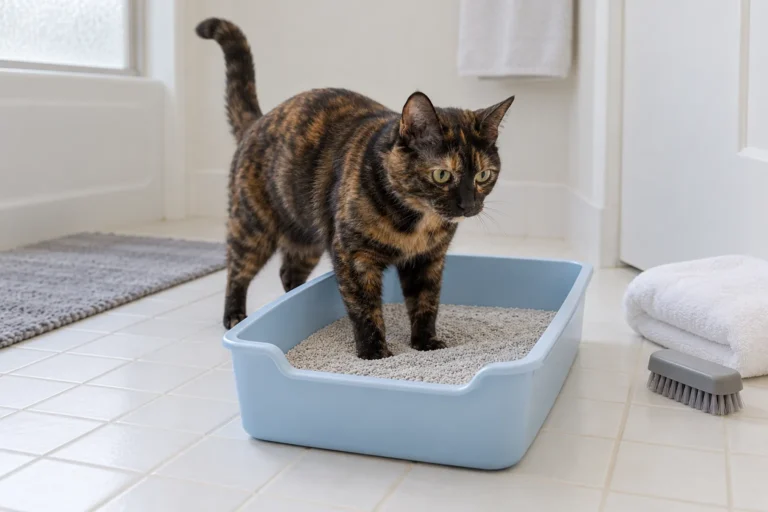
How to clean a litter box, and how often
The daily scoop and the full wash, done in an apartment with no yard or hose, plus what never to wash a litter box with.
9 min readUpdated
Smell and cleaning guides, all together
Where the litter box goes
Guidelines describe a good spot as quiet and private, open to the cat at any hour, with a clear way out, and away from food, water and loud machines such as a washer. In a studio that usually rules out the corner beside the food bowl and the laundry closet. What is left: the bathroom, a hallway nook, or a living room corner screened by furniture.
-

Where to put a litter box in a small apartment
Bathroom, closet, corner, hallway nook or cabinet: how each small-apartment spot holds up against vet guidelines, and where the second box goes.
11 min readUpdated
-

How many litter boxes for two cats?
Why two cats get three boxes, where the third fits in a small apartment, and how far the guidance bends when space stops at two.
11 min readUpdated
Vet note. When a cat starts going outside the box, book a vet visit before you change the setup: urinary disease, kidney and thyroid problems, diabetes and joint pain can all begin this way, and sick cats often look fine. A male cat that strains in the box and passes little or no urine is an emergency, because a complete blockage can kill within 24 to 48 hours.
Litter box questions from small homes
How deep should the litter be?
About 1 to 2 inches (2.5 to 5.1 cm) suits most cats, and the AAFP and ISFM guidelines set a floor of roughly 1.25 inches (3 cm). Fill to that line after each full change rather than topping up by eye. The cat litter calculator works out how much your boxes take in a month, and what that costs at your price.
Can I flush cat litter in an apartment building?
Not even a litter labeled flushable: San Diego Humane Society warns that it can block older plumbing, and California requires litter sold there to discourage flushing. Bag it for the trash instead; the disposal guide compares bins that hold the smell between trash runs.
Is a self-cleaning box a good idea in a small apartment?
That depends on the floor you can spare, because these units are bigger than a plain tray and the shelter advice on them disagrees. If you buy one, bring it in slowly: keep the usual boxes out, and let the cat explore the new one switched off, as San Diego Humane Society and the maker Whisker both suggest.
When should the litter box itself be replaced?
Cornell’s Feline Health Center says to replace a box that still smells after a scrub, or one that has cracked, since scratches and cracks hold odor. Wash it somewhere food is never made: San Diego Humane Society suggests a laundry sink or the bathtub, cleaned afterward.
Sources
- AAHA and AAFP, 2021 Feline Life Stage Guidelines: general litter box considerations. Read Oct 16, 2026.
- AAFP and ISFM, Guidelines for Diagnosing and Solving House-Soiling Behavior in Cats, Journal of Feline Medicine and Surgery, 2014. Read Oct 16, 2026.
- Grigg, Pick and Nibblett, covered versus uncovered litter box preference, Journal of Feline Medicine and Surgery, 2013. Read Oct 16, 2026.
- Cornell Feline Health Center, Feline behavior problems: house soiling. Read Oct 16, 2026.
- Cornell Feline Health Center, Feline lower urinary tract disease. Read Oct 16, 2026.
- San Diego Humane Society, Litter boxes 101. Read Oct 16, 2026.
- PetMD, Why do cats kick litter everywhere? Read Oct 16, 2026.
- Whisker, Litter-Robot 4 product page, on introducing the unit. Read Oct 16, 2026.
- California Legislature, AB 2485 (2006), cat litter labeling. Read Oct 16, 2026.