


Pet store shelves carry a dozen cat litter types, from clumping clay to pine pellets, silica crystals, walnut shells and tofu, and most bags promise the same three things. The veterinary evidence is far narrower than the shelf. It covers texture, scent and clumping, and it says almost nothing about the newer materials.
Start with types of cat litter compared, which puts weight per bag and the label’s dust claims side by side, then come back here for what the evidence says.
Which litter question is yours?
Pick one for the short answer and the comparison that covers it.
A first bag for a new cat
Fine, unscented and clumping is what most cats prefer, and it is the safest first choice. Pour about 1 to 2 inches (2.5 to 5.1 cm) and see how the cat digs before you change anything.
Start with litter types by weight and dust
Carrying bags up the stairs
Lighter litters exist in clay, paper and plant fibers. Compare what each maker states for weight, then check that the lighter bag still clumps the way your cat likes.
Start with lightweight litter for apartment stairs
Odor in a small space
Scented litter is the one fix the vet guidelines rule out. Look at the odor claims on unscented bags instead, and at how often the box gets scooped.
Start with odor-control litters compared
Litter for a self-cleaning box
Most units need clumping litter. Whisker says pellet litters, Feline Pine among them, will not sift properly in a Litter-Robot.
Start with what litter an automatic box takes
A cat with asthma, or dust in the air
VCA names litter dust as a possible trigger for feline asthma flare-ups and suggests a low-dust litter for those cats. Coughing or wheezing needs a vet first.
Start with the dust claims each label makes
What the evidence says about cat litter types
Feline guidelines from the AAFP and ISFM, Cornell’s Feline Health Center and International Cat Care agree on a short list: most cats prefer a fine, sand-like litter that clumps and carries no added scent. No study we found compares silica, corn, wheat, walnut, tofu or pine with clay under veterinary supervision. For those, the guides in this section compare what each maker prints on the bag and the product page, and say so.
| What to look at | What the sources say |
|---|---|
| Texture | Fine and sand-like suits most cats (AAFP and ISFM, 2014; Cornell). |
| Scent | Unscented. The guidelines advise against scented litter and deodorizing powders. |
| Clumping | Preferred. In a 2025 study across four rooms of a cat cafe (46 cats, 3 days per room), clumping clay was used 258 times, clumping wood 152 and clumping paper 66. The test litters came from the lead author’s employer. |
| Depth | About 1 to 2 in (2.5 to 5.1 cm) (Cornell). The AAFP and ISFM set a minimum of about 1.25 in (3 cm). |
| Kittens | A box with low sides matters more than the litter. No veterinary source sets a litter type for kittens or an age to change it. |
What people buy instead
A 2025 survey of 462 UK cat homes shows the gap between preference and purchase. Pellets were the most common litter, in 34.0% of homes, ahead of clay at 28.6%. Owners picked mainly for odor control (42.9%), rarely because of what the cat seemed to like (6.7%) and almost never on a vet’s advice (3.9%). The authors add that pellets may be uncomfortable to stand on, more so for older cats.
None of that makes pellets wrong. It means the smell of the bag got more attention than the paws in the box. If your cat digs, covers and stays in the box for a few seconds, the litter is working; if it perches on the rim or leaves in a hurry, the texture is the first thing to change.
The litter guides, in reading order
Each guide takes one litter or one buying question and lays the maker’s numbers side by side: weight per bag, what the label says about dust, how it clumps and what a month of it costs.
-
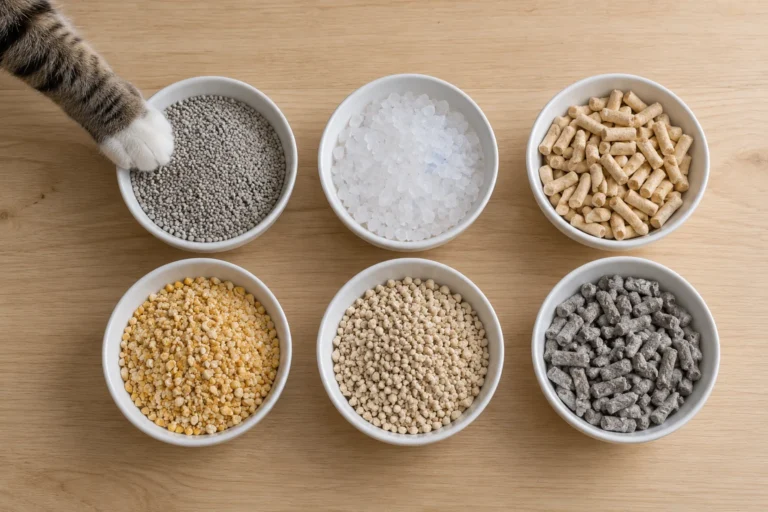
Types of cat litter compared: weight and listed dust claims
Nine litter types side by side: what each is made of, whether it clumps, bag weights and what each maker claims about dust.
14 min readUpdated
-

Odor-control cat litters compared: what each maker claims
Eight odor-control litters side by side: the odor technology each maker names, the days it promises, and whether any test stands behind the number.
14 min readUpdated
-
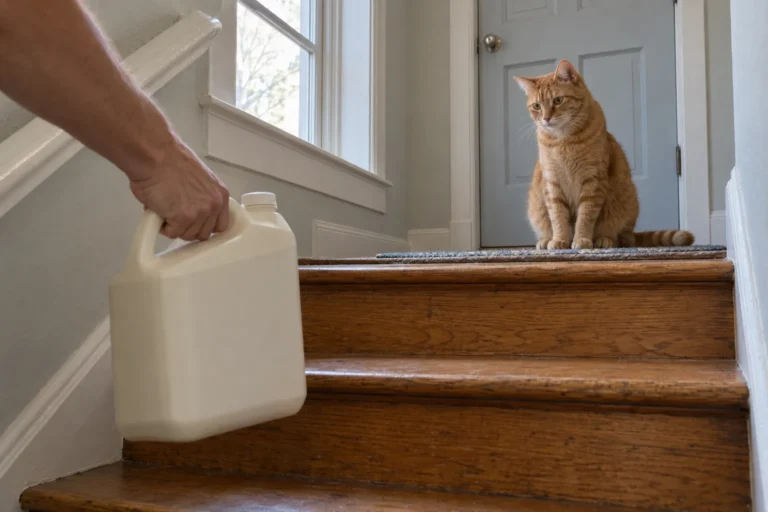
Lightweight cat litter for apartment stairs
Lighter litters by their makers’ own claims, and the arithmetic for how many pounds one cat’s box sends up your stairs each month.
13 min readUpdated
-
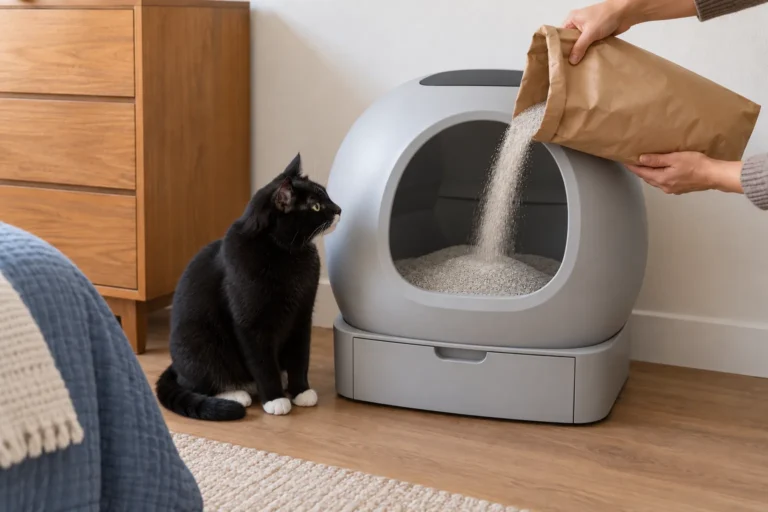
What litter to use in an automatic litter box
What each self-cleaning box maker says about litter, the litters that meet those rules, and how much a month you carry upstairs.
14 min readUpdated
-

Eco-friendly cat litters compared: walnut, corn, wheat, grass and paper
Six plant and paper litters side by side: what each is made from, what the green words on the bag cover, and where the used litter goes.
14 min readUpdated
Changing litter without a standoff
Change one thing at a time. Cornell suggests switching gradually, mixing the new litter into the old rather than swapping the whole box at once. In a home with two boxes, put the new litter in one and leave the other alone, so the cat can vote with its paws. A second box filled to a different depth tells you the same thing about depth.
If the cat starts going elsewhere after a switch, put the old litter back. If it keeps avoiding the box, book a vet visit: Cornell lists urinary disease, kidney and thyroid problems, diabetes and arthritis among the causes of litter avoidance, and a sick cat can look perfectly well.
Cat litter questions
Is scented litter bad for cats?
The feline guidelines we read advise against it, along with deodorizing powders, and most cats pick unscented litter when given the choice. A cat’s nose is far more sensitive than yours, so a smell you find pleasant in a closet-sized bathroom can put the cat off its box.
Is clay litter too dusty for a small apartment?
It can be for some homes. VCA says clay produces dust that can irritate cats and people with breathing problems, while pine, corn and recycled paper are often low in dust but may not clump as tightly. In a studio, the box often sits in the room where you sleep.
Can kittens use clumping litter?
Sources split. VCA says most cats prefer clumping litter and sets no age limit, while kitten rescue groups advise non-clumping, unscented litter for young kittens, Kitten Lady until about 2 to 3 months old, because kittens explore with their mouths.
Sources
- AAFP and ISFM, Guidelines for Diagnosing and Solving House-Soiling Behavior in Cats, Journal of Feline Medicine and Surgery, 2014. Read Oct 16, 2026.
- Cornell Feline Health Center, Feline behavior problems: house soiling. Read Oct 16, 2026.
- International Cat Care, consensus guidelines on feline lower urinary tract diseases, Journal of Feline Medicine and Surgery, 2025. Read Oct 16, 2026.
- Iwabuchi-Inoue and others, litter box size and litter type preference in cats, Journal of Veterinary Medical Science, 2025. Read Oct 16, 2026.
- Veterinary Record, feline management practices and resource provision in the UK, 2025. Read Oct 16, 2026.
- VCA Animal Hospitals, Inhalant treatment for feline asthma and bronchitis. Read Oct 16, 2026.
- VCA Animal Hospitals, Different types of cat litter. Read Oct 16, 2026.
- Kitten Lady, Litter. Read Oct 16, 2026.
- Whisker, Best litter for Litter-Robot. Read Oct 16, 2026.