

Caring for a cat in a small apartment comes down to a few moments that need planning: the first weeks after adoption, the days you are away, moving day, and a home with no hidden hazards. Each guide here starts from shelter and veterinary advice, and says so plainly when no source gives a number.
Start with the first week
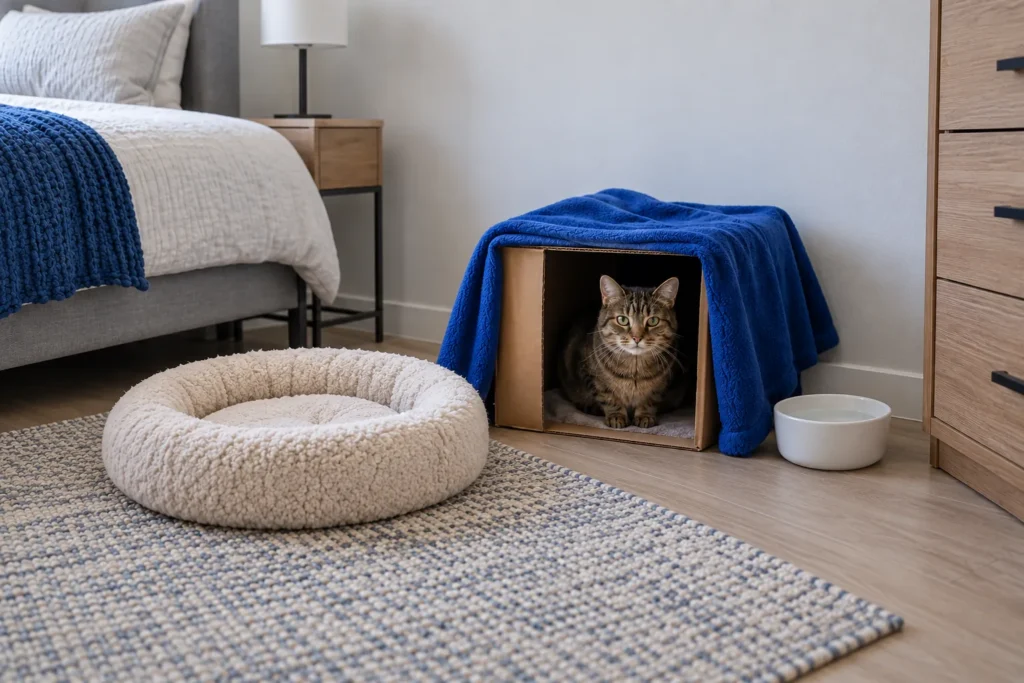
- One room first. A small room with a door: food, water and a bed at one end, the litter box at the other, and a hiding spot you can reach (block the ones you cannot, like under the bed).
- A slow timeline. Shelters use the 3-3-3 rule as a rough guide: about 3 days to decompress, 3 weeks to learn the household and 3 months to feel at home. It is a rule of thumb, not research.
- A carrier that stays out. Leave it open in the room with familiar bedding and a few treats until it is just another place to nap. Expect days or weeks.
For a cat arriving soon, read the 3-3-3 rule guide before anything else here, then keep Start here open for its tick-off setup list.
What is coming up for you and your cat?
Each answer gives the plan in brief and the guide, printable or tool that covers it.
Adoption day is close
Ready one room, not the whole apartment. Food, water and a bed go at one end, the box at the other, plus a hiding spot you can still reach.
Start with the new cat checklist (free printable)
- Start here, with the same list as tick boxes
A weekend away
Book the sitter first, then pack. The checklist covers food, litter and the notes to leave behind; the calculator sets a sitter against boarding.
Start with the weekend-away checklist
- Cat-sitter instructions to fill in
- Weekend cost calculator
Long workdays
No vet body we found puts a number on safe hours alone for a healthy adult cat. Plan the day around play before you go and toys or a puzzle for the hours you are gone.
Start with how long a cat can be left alone
A trip to the vet
Cat Friendly Homes suggests a carrier with a top and a front opening, and a top half that lifts off, so the exam can happen with the cat still sitting in the base. Leave it out for days beforehand.
Moving to a new place
On the day, the cat waits in one closed room with its things and travels last, in its carrier, in your own car. At the new address it starts again in a single room.
Then read the 3-3-3 rule guide, since a new home means settling in again
A second cat is coming
Separate rooms first, scent before sight, and a face-to-face meeting only once the newcomer is relaxed. Fights with injuries, or one cat that stops eating, mean pausing and asking a vet or a certified behavior consultant.
Start with litter boxes for two cats
- Introducing cats when the spare room is the bathroom
A new plant or a bouquet
Search its scientific name on the ASPCA plant list before it comes in. True lilies and daylilies never belong in a home with a cat.
Check the ASPCA plant list
Vet note. A new cat that hides and stops eating for more than a day or two needs a vet, and so does a kitten that seems weak or sleeps far more than it plays.
A new cat at home
Adopting an adult or a senior? The cat age calculator turns its age into human years and names its life stage, so you know which checkups come next.
The 3-3-3 rule in detail, a kitten’s first week, a printable new cat checklist, and how to bring a second cat into a home that already has one. Introductions go step by step: separate rooms first, scent before sight, and the two meet only after the newcomer has calmed down.
-

The 3-3-3 rule for a new cat in a small home
What the first three days, three weeks and three months with a new cat look like, and how to run them from one small room.
11 min readUpdated
-
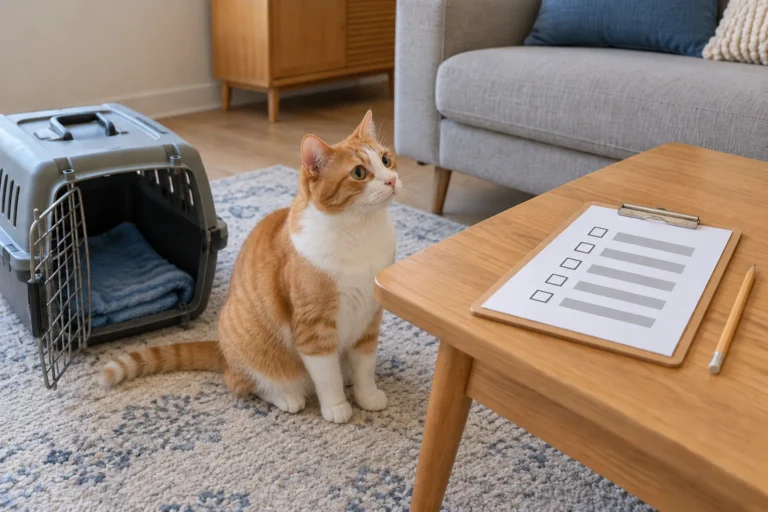
New cat checklist for a small home (free printable)
Two printable pages for the week before a new cat arrives and the months after: setup, cat-proofing, the 3-3-3 stages and a log.
8 min readUpdated
-
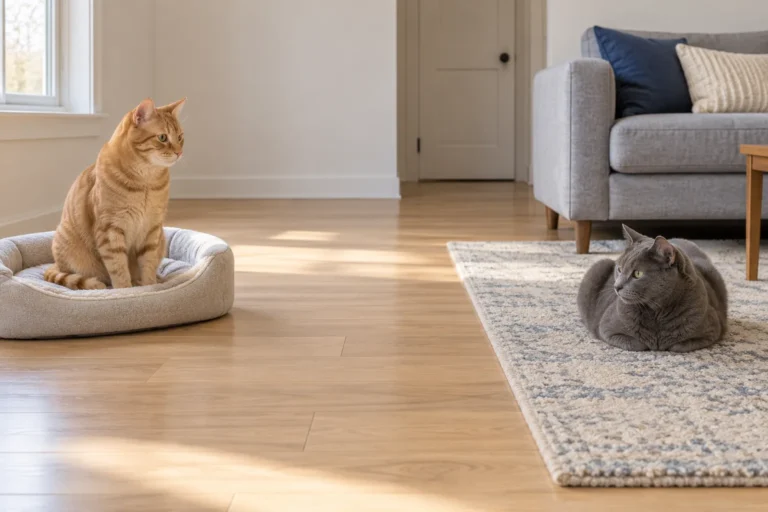
How to introduce a new cat to your cat in a small apartment
Five steps for introducing a new cat to your cat when the only spare room is the bathroom, and the signs that mean slow down.
10 min readUpdated
Time alone and sitters
No veterinary body we found sets a safe number of hours or days to leave a healthy adult cat alone, so these guides do not make one up. They cover play before you leave, toys for the hours on its own, pet cameras, and a sitter’s schedule: Cats Protection, a UK charity, recommends visits at least twice a day. One guide prices a weekend away three ways.
-
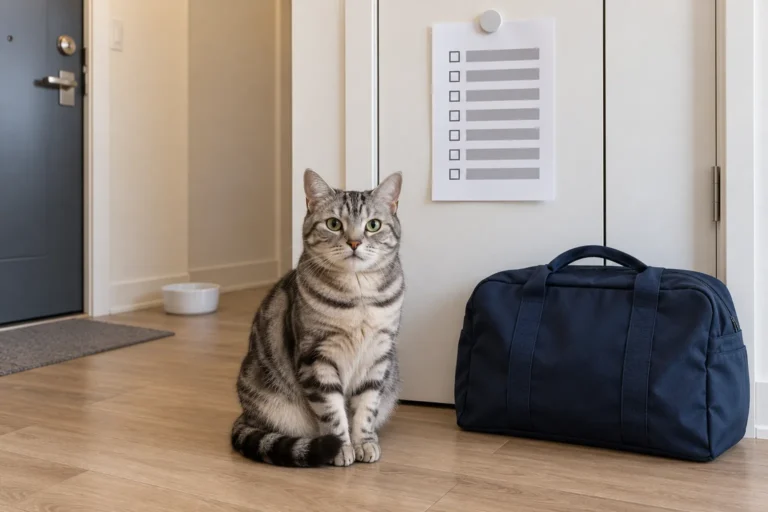
Weekend-away checklist for a cat at home (free printable)
One printable page for a weekend away: who visits and how often, food, water and litter, a safe apartment, and the vet signs to watch.
3 min readUpdated
-

How long can you leave a cat alone?
Why no vet group puts a number on hours alone, and the routine the sources give instead: play, puzzles, sitter visits, a safe home.
13 min readUpdated
Moving and travel
On moving day the cat stays shut in one quiet room with its essentials, leaves last in a secured carrier in your own car, and starts the new place in a single room again. The travel guides compare carriers for two cats, for large cats and for the cabin of a plane.
Home and cleaning
Cat hair in a small space, and plants a cat can live with. Check every plant against the ASPCA’s list of plants that are toxic and non-toxic to cats, by its scientific name, before it comes through the door.
Safety. True lilies and daylilies can cause fatal kidney failure in cats. Every part is dangerous, including the pollen and the water in the vase. If your cat may have touched one, call a vet at once.
Care questions from small homes
How often should a cat sitter come?
Twice a day is the floor Cats Protection sets, with more visits for kittens, seniors and any cat with a medical condition. Two visits also mean two scoops a day, which matters in a small home. The sitter sheet gives them the rest in writing.
Can two cats share one carrier?
Cat Friendly Homes says one cat per carrier. International Cat Care adds that separate carriers give better air flow, more room and less risk of overheating, and travel stress can make two friendly cats lash out at each other, which can sour things at home.
Where should the carrier ride in the car?
Only a crash-tested carrier should be belted to the back seat, the Center for Pet Safety advises through Cat Friendly Homes. Any other carrier goes on the floor behind one of the front seats, where it cannot slide or fall.
Which signs mean an introduction is going badly?
Go back a step at any sign of tension. The FelineVMA lists staring, blocking, tail twitching, hiding and stalking as the subtle signs, and hissing, growling, swatting, chasing and fighting as the blatant ones. If either cat is hurt or stops eating, pause the whole process and get advice.
Can I grow mint on the windowsill instead of catnip?
Not as a cat plant. Garden mint (Mentha) and lemongrass (Cymbopogon citratus) both appear among the ASPCA’s toxic plants for cats, so neither stands in for catnip or cat grass. Keep them where the cat cannot reach, or skip them.
Sources
- San Diego Humane Society, Adopting a cat: confinement in a new home. Read Oct 16, 2026.
- Humane Society of the Pikes Peak Region, The 3-3-3 rule: helping your new cat feel at home. Read Oct 16, 2026.
- AAFP Cat Friendly, Getting your cat to the veterinarian. Read Oct 16, 2026.
- AAFP and ISFM, Feline Environmental Needs Guidelines, Journal of Feline Medicine and Surgery, 2013. Read Oct 16, 2026.
- Cats Protection, Going on holiday. Read Oct 16, 2026.
- International Cat Care, Moving house with your cat. Read Oct 16, 2026.
- ASPCA Animal Poison Control, Toxic and non-toxic plants for cats. Read Oct 16, 2026.
- US Food and Drug Administration, Lovely lilies and curious cats: a dangerous combination. Read Oct 16, 2026.
- AAFP Cat Friendly Homes, Cat carriers. Read Oct 16, 2026.
- International Cat Care, article on carriers and car journeys. Read Oct 16, 2026.
- Feline Veterinary Medical Association, Step-by-step guide to introducing a new cat. Read Oct 16, 2026.
- ASPCA Animal Poison Control, Mint and Lemon grass entries. Read Oct 16, 2026.