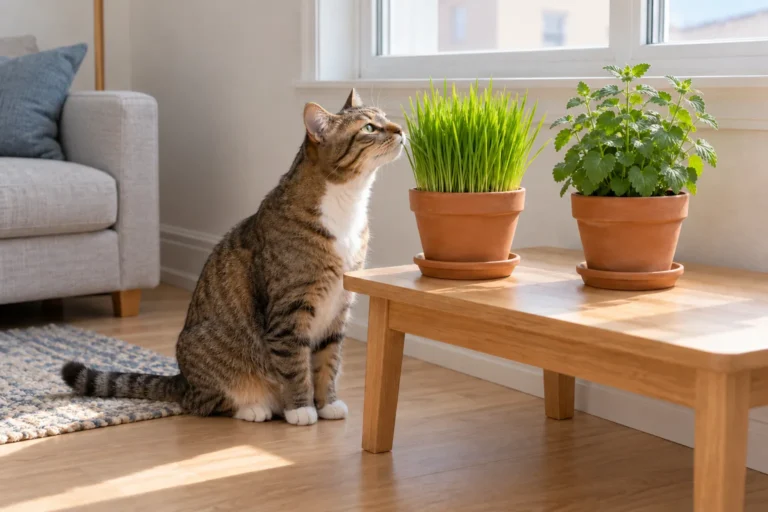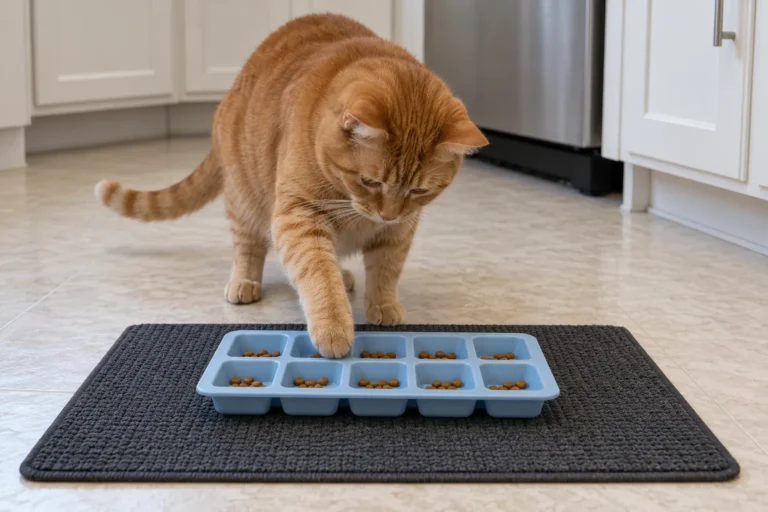
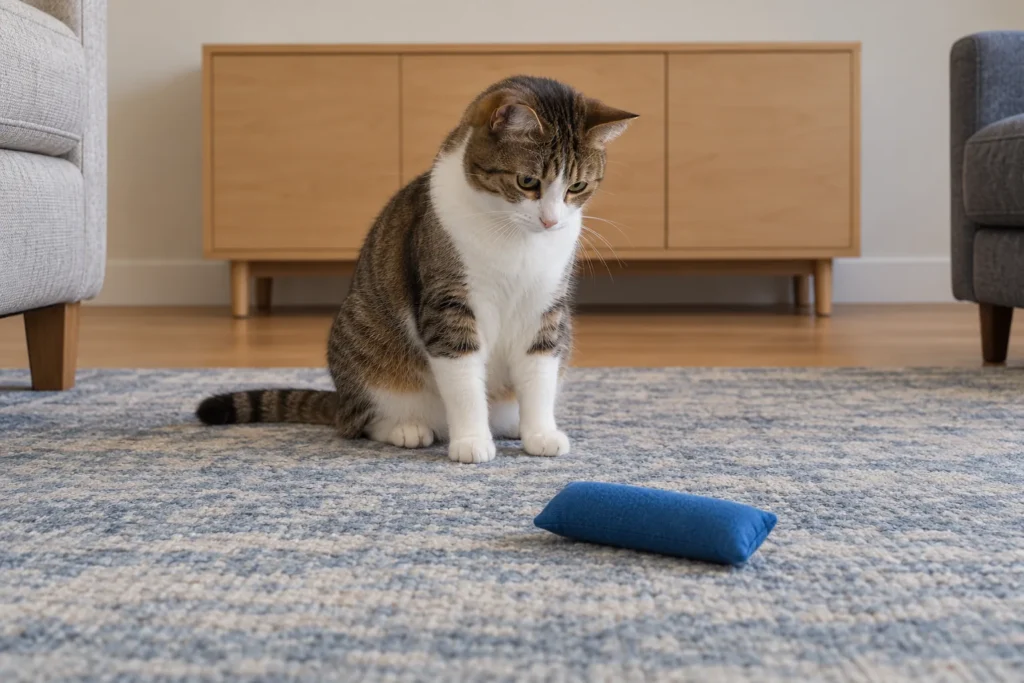
A bored cat usually shows it as a change: more sleep than usual, meowing or getting in your way for attention, zoomies every day, overgrooming or clawing the furniture. Have your vet rule out a health cause first, then change how you play, which toys are out and where your cat can rest.
What you need
- Somewhere to jot down what changed and when it happens.
- A wand toy for play together, put away after every session.
- Two or three small toys your cat can bat or kick, with spares stored out of sight.
- A clear stretch of floor, ideally on a rug.
- A cardboard box laid on its side, or another spot your cat can retreat to.
Most of the fixes cost nothing. Before you order a basket of toys, work out which gap you are filling: too little play, play that does not look like a hunt, the same toys out for weeks, or nowhere quiet to stop. For food-based activity, the puzzle-feeder comparison explains the formats.
Key takeaways
- Ask your vet about any behavior change before you blame boredom. → read the signs
- Play two or three short sessions a day, moving the toy like prey and ending with a catch. → change the invitation
- Keep a few toys out, swap them often, and put string toys away after play. → edit the toy selection
- Leave a retreat your cat can use without being followed into it. → protect resting space
Jump to: Possible signs · Play technique · Toy rotation · Room setup · A workable routine · Questions
1. Read bored cat signs as changes, not a score
Cats Protection’s boredom guide lists the signs it sees: zoomies that come daily or even more often, sleeping more than usual, excessive meowing or getting in your way, pacing, overgrooming, overeating, destroying furniture, and attacking people or other animals. In the same breath it warns that many of these behaviors can have other causes.
Sleep is the hardest one to read. Cats Protection notes that some cats sleep 12 to 18 hours a day as a matter of course, so the sign is more sleep than your cat usually gets, not a big number.
- Zoomies: note how often, and whether they land at the same hour each day.
- More vocal contact: write down the time and what was going on nearby.
- Less interest: list which familiar games now get ignored.
- Grooming or appetite changes: these go to your vet, not to a toy shop.
- Scratched furniture: check the scratching surface as its own issue.
Record what you actually saw, such as a cat walking back and forth between the desk and the hallway during a meeting. Leave out labels like lonely or frustrated. Add whether the pattern is new, whether anything else in the household changed, and what happened when you offered a game.
Check with your vet: Cats Protection says to consult your vet first when your cat’s behavior changes, so medical causes are ruled out before anyone calls it boredom. Its own list includes overgrooming, overeating and extra sleep, which is why the vet visit comes before any new toy.
Scratching alone is a poor reason to declare a cat bored. Cornell’s destructive-behavior guide calls scratching largely a marking behavior, with scent left from glands in the paws. Use the scratching-surface guide for that problem rather than adding chase games to every furniture complaint.
2. Change the invitation before replacing the toy
Once health is ruled out, look at how you play before you look at what with. The San Francisco SPCA play guide says some cats are drawn to things in the air while others prefer staying close to the ground, so try both before deciding a toy has failed. It also says to copy prey: a small twitch of the toy catches the eye better than nonstop motion, and you should never dangle it in your cat’s face.
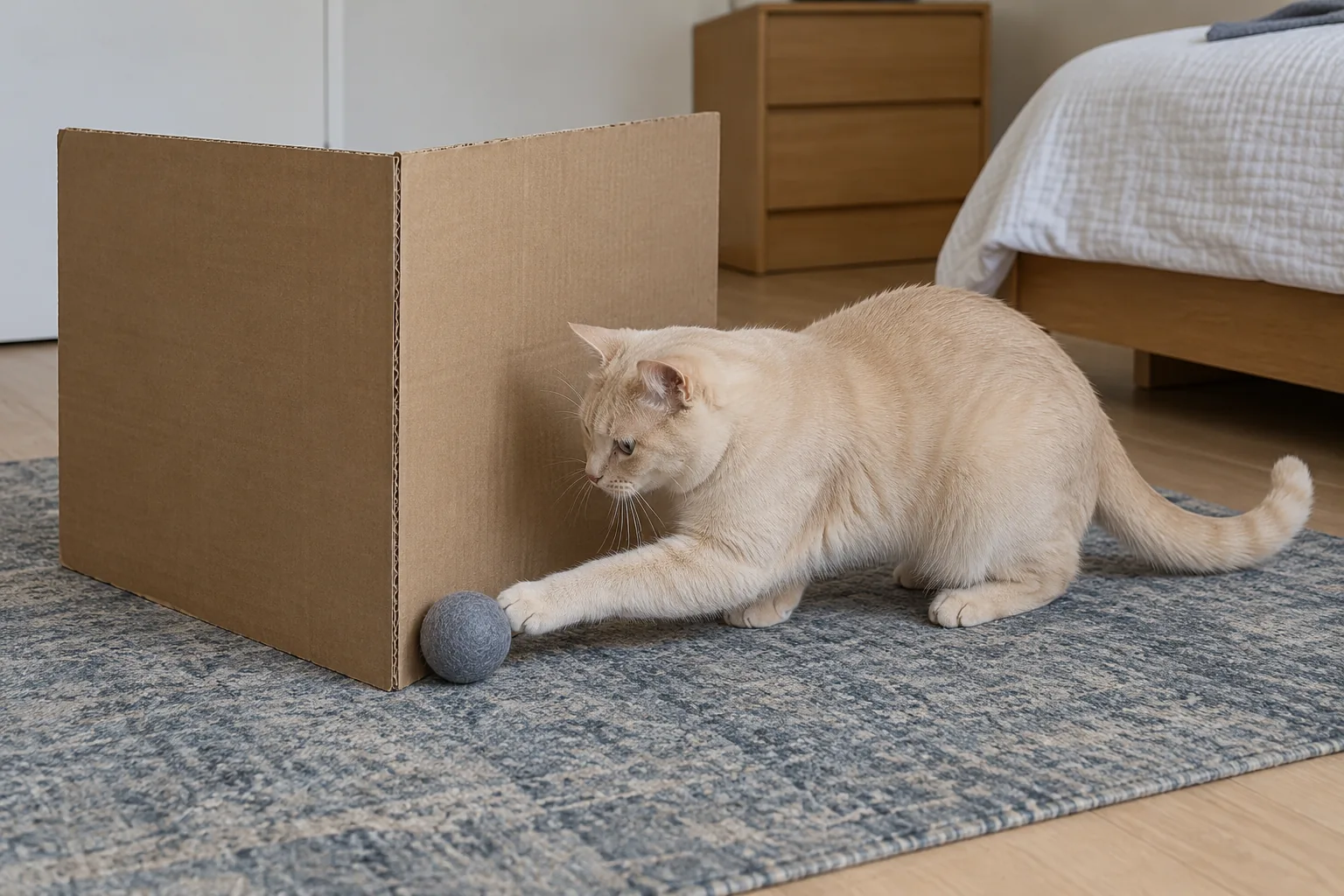
For a floor game, clear a route beside a broad cardboard screen or the edge of a sofa. Slide the toy into view, pause, then pull it out of sight around the corner. Keep your hands out of the chase path; the SF SPCA says never to play with hands and feet.
AAHA describes play as a hunting sequence, from the stare and the stalk through to the pounce and the kill. At the end, it says, slow the game down so your cat can catch the prey, then give a treat to complete the sequence.
How much play? For AAHA the answer is two or three sessions daily, each lasting 10 to 15 minutes, since a few short bursts hold interest better than one long session. Busy day? Cats Protection says very short games of one to two minutes are fine.
A cat that only watches has not failed. The SF SPCA expects some cats to just look at you, or bat half-heartedly at the toy, during the first few sessions. Do not pick your cat up and set it beside the toy. End the session when your cat walks off and try a different movement later. If you need a different kind of toy, the boredom-toy comparison explains the options.
3. Give a cat bored with toys a smaller selection
If your cat seems bored with toys it already owns, put away the abandoned pile and leave out two or three. Cats Protection’s play advice says to swap toys around regularly to keep them interesting, and to check them for wear, replacing them when needed. A closed tin for the reserve lets you make a deliberate swap instead of spreading everything across the room.
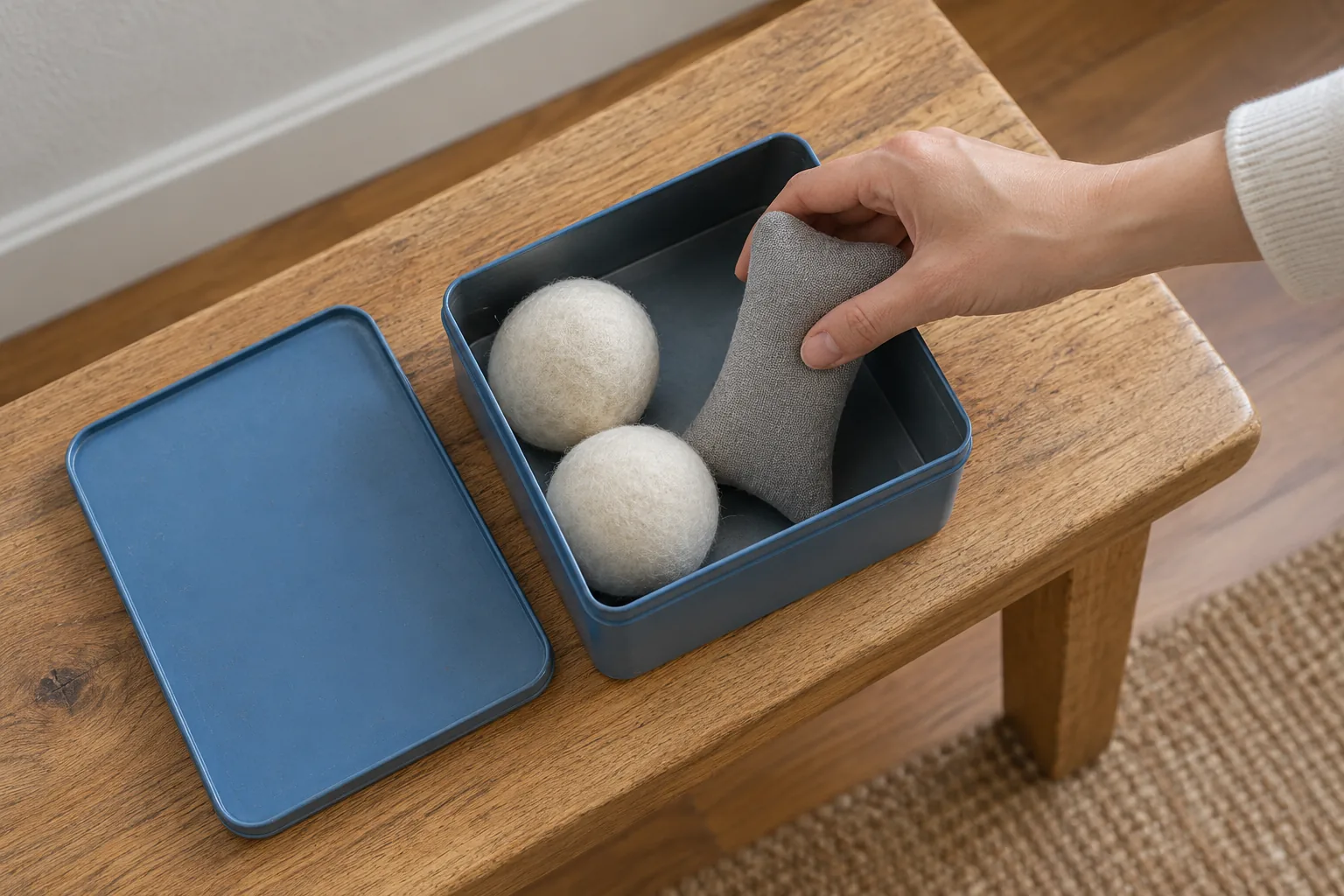
Sort what you own by how it moves: one to bat, one to carry or kick, one to investigate. You do not need every kind out at once. If a toy is ignored, change how you present it before buying a similar one, and note which surface and movement you tried.
Put supervised toys away: Cats Protection warns against leaving a cat alone with toys it could shred and eat or get tangled in. Wands, string and ribbon go back in the tin after every game: swallowed string can be deadly. If you ever spot string trailing from your cat’s mouth, never pull it out; phone your vet.
In a studio, keep the tin beside the chair you usually sit in. Putting the toys away then becomes the natural end of the session rather than a chore.
4. Leave room to explore and room to stop
Play is one need among several. In the AAFP and ISFM environmental-needs guidelines, a cat’s home rests on five pillars, and a safe place to retreat is the first of them, ahead of separate resources and the chance to play and hunt.
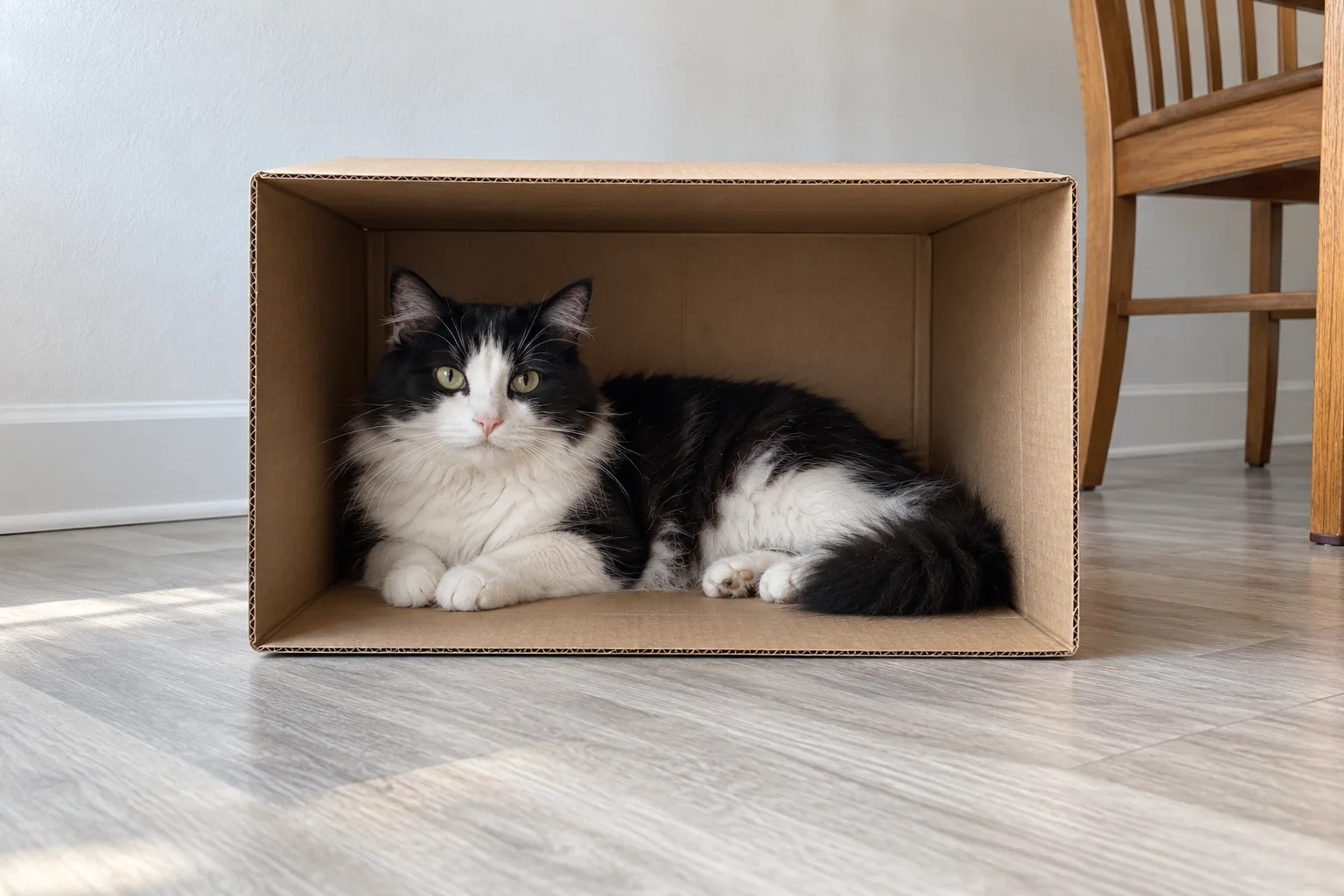
The cheapest safe place is a cardboard box laid on its side, which those guidelines describe as giving easy access and a roof: a refuge from a perceived threat. Set it where you can see in without moving your cat, keep the approach clear, and never make the opening a target for play while your cat rests inside.
Height adds options when floor space is short. Raised spots let a cat watch the room while feeling hidden, and the compact cat tree guide covers freestanding ones that fit an apartment.
In a studio, draw the play route around the retreat instead of through it. If the resting spot keeps getting interrupted by foot traffic, a new toy will not fix that; move the bed or the traffic first. The enrichment activity collection has more ideas once you know which kind of opportunity is missing.
5. Build a routine that fits your apartment
Fit play around your real day. AAHA notes that cats are most active at dawn and dusk, which makes mornings and evenings the obvious slots, and a session before bed can help tire your cat out for the night. A cat recovering from surgery or injury, or living with arthritis, may need fewer and gentler sessions; your vet can say how much.
Shared walls and a downstairs neighbor change the game, not the need for it. Play on a rug rather than bare boards, keep the toy low, and save hard rolling balls for daytime. Pick a spot clear of the door swing so a roommate can walk in without stepping into the chase.
- Before work: one short wand session while the coffee brews.
- While you are out: a puzzle feeder or a box to explore, set away from the resting spot.
- After work: the full session, ending with a catch and a treat.
- Before bed: a slower game, then the wand goes back in the tin.
Use the enrichment plan builder to set a plan you can keep. If several people share care, log who played, with what, and how your cat responded. A short factual entry gives the next person something to change; the word bored does not.
Questions about indoor cat boredom
How do you tell if a cat is bored?
Look for a change from your cat’s normal pattern: daily zoomies, more sleep than usual, meowing or getting underfoot, pacing, overgrooming or clawing furniture. Cats Protection lists these signs but says each can have other causes, so ask your vet about any new pattern before you change the toys.
How do you help a bored cat?
After a vet check, add short daily play sessions that copy a hunt and end in a catch, swap which toys are out, and give your cat a box or a raised spot to retreat to. Most of that costs nothing. Buy a new toy only once you know which gap it fills.
How can a roommate help without repeating the same game?
Keep a shared note of the object offered, the location and the response. The next person can vary the invitation rather than emptying the whole toy container. Agree where supervised equipment belongs afterward, and leave the resting area available so your cat can decline interaction without being followed.
What if play on bare floors disturbs the downstairs neighbor?
Move the game onto a rug and keep the toy sliding low along it, where pounces land softly. Put hard balls and rattling toys away during late hours and early mornings. If your cat is on restricted activity for a health reason, ask the vet before you change how hard it plays.
Next step. If the empty hours are the gap, compare puzzle feeders by type and choose one that suits your cat and your floor.
Sources
- Cats Protection, Cat boredom busters (blog), read Oct 22, 2026.
- Cats Protection, Cats and Play, read Oct 22, 2026.
- San Francisco SPCA, Playing with Your Cat, read Oct 21, 2026.
- AAHA, How Often Should You Play with Your Cat?, read Oct 21, 2026.
- AAFP and ISFM, Feline Environmental Needs Guidelines, read Oct 21, 2026.
- Cornell Feline Health Center, Feline Behavior Problems: Destructive Behavior, read Oct 21, 2026.
- VCA Animal Hospitals, Linear Foreign Body in Cats, read Oct 16, 2026.