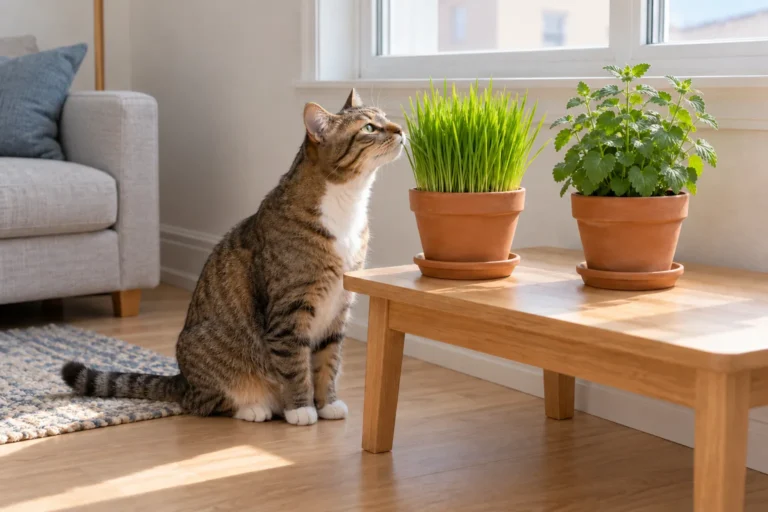
Catnip and silvervine are two different plants whose scent sets off the same rubbing and rolling in many cats. Silvervine is sold mainly as dried fruit galls, and in the largest study we found, more cats reacted to it than to catnip, including most of the cats that ignored catnip. Fresh catnip is another route, and our guide to growing catnip and cat grass on a windowsill covers the pots and keeping the cat off them.
What you need
- Dried catnip, silvervine gall powder, or one toy filled with either
- A glass jar with a screw lid
- Cupboard space behind a door your cat cannot nose open
- An old towel or a washable throw rug
- A kicker toy, for the cat that gets wound up instead of mellow
Key takeaways
- In a 2017 study of 100 mostly shelter and sanctuary cats, 79% responded to silvervine, including 71% of catnip ignorers, and 68% to catnip. → at a glance
- Look for gall powder or whole galls; sticks are cut from the wood, which drew few reactions, so treat a stick as a chew toy. → powder, galls or sticks
- The ASPCA rates catnip toxic, since eating it can cause vomiting and diarrhea; silvervine is unlisted, not cleared: small amounts of either, now and then. → safety rules
- Hold sessions on the floor of a closed room, window shut, away from shelves, cat-tree tops and stairs. → one small room
- Cat keeps vomiting after scent time or after chewing a stick? Call a vet or pet poison helpline at once. → when to call for help
Catnip vs silvervine at a glance
Both plants act through the nose, and neither works on every cat.
| Point | Catnip | Silvervine |
|---|---|---|
| What you buy | Dried catmint (Nepeta cataria), loose or sewn into toys | Dried fruit galls of Actinidia polygama, whole or ground; also sticks of the wood |
| Main scent compounds | Nepetalactone | Actinidine, iridomyrmecin and isodihydronepetalactone, with little nepetalactone |
| Cats that responded in a 2017 study of 100 cats | 68% | 79%, including 71% of the 31 cats that ignored catnip |
| ASPCA plant list | Toxic to cats: vomiting and diarrhea if eaten | Not listed |
| Youngest age that reacts | About 3 months, per International Cat Care | No age given in any source we read |
Treat those percentages as odds, not a promise. Bol and colleagues worked mostly with shelter and sanctuary cats in Riverside, California, and one observer, who knew which plant each cat had been given, scored every reaction. A useful study, not the last word.
What catnip is
Catnip is dried catmint, Nepeta cataria. The ASPCA’s entry names nepetalactone as the substance of concern. Researchers credit the same compound for the catnip response, and in Bol’s chemical analysis catnip held far more of it than the other plants did. Shops sell it loose in pouches, stitched into fabric kickers and mixed into blends with gall powder.
What silvervine is, and why it is sold as galls
Silvervine, written silver vine in the research papers we cite, is Actinidia polygama, a climbing plant known in Japan as matatabi and commonly used there to excite cats. The part sold for cats is the fruit gall: fruit that grew misshapen around the larvae of a gall midge, unlike the smooth oval fruit the vine normally bears. Dried galls are rich in actinidine, iridomyrmecin and isodihydronepetalactone but hold very little nepetalactone. Cats are reacting to relatives of the catnip compound, not the compound itself.
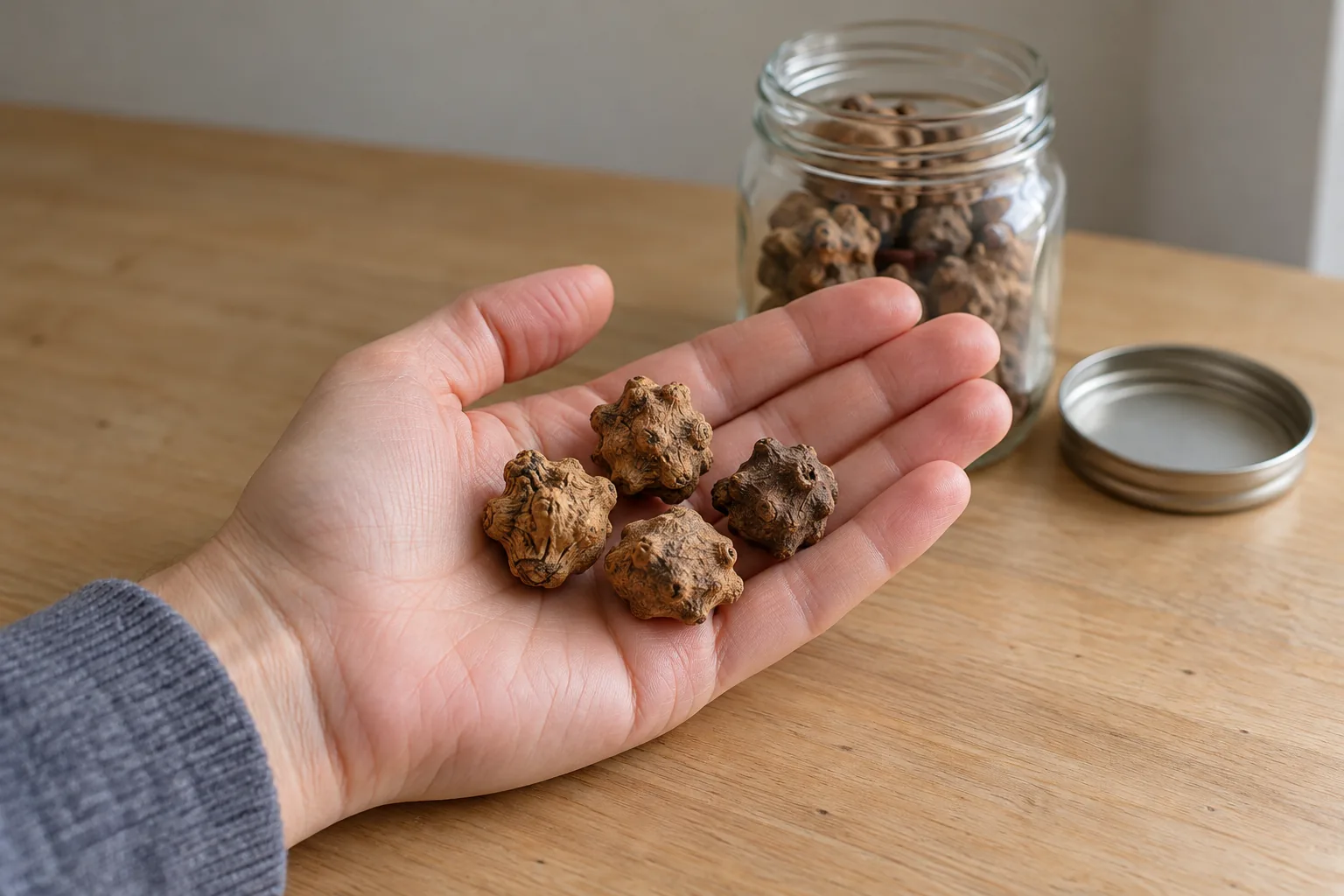
That chemistry probably explains why a cat that ignores one plant may answer the other: of the 31 cats in Bol’s study that showed no interest in catnip, 71% responded to the galls.
Powder, whole galls or silvervine sticks?
Gall powder and whole galls are the forms with evidence behind them. Bol’s cats responded mostly to powdered dried galls, while the wood and the plain, gall-free fruit drew few or no responses. Whole galls come loose by the bag or sealed inside plush toys.
Sticks are lengths of that wood. Some sellers claim chewing them cleans teeth, but none of the veterinary sources we read says so. Buy a stick as a chew toy, not as a stronger form of the plant.
How cats react to catnip and silvervine
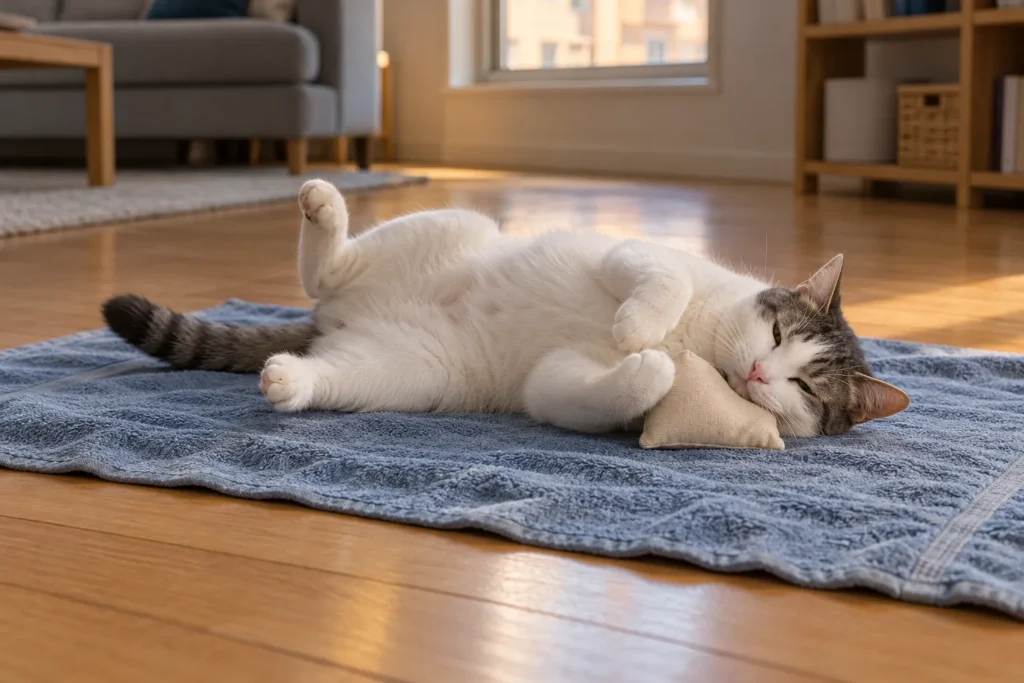
Bol and colleagues describe the classic response as sniffing and licking the material, shaking the head, rubbing the chin and cheeks against it and rolling over, sometimes with drooling or kicks from the back feet. Researchers call the rubbing and rolling self-anointing.
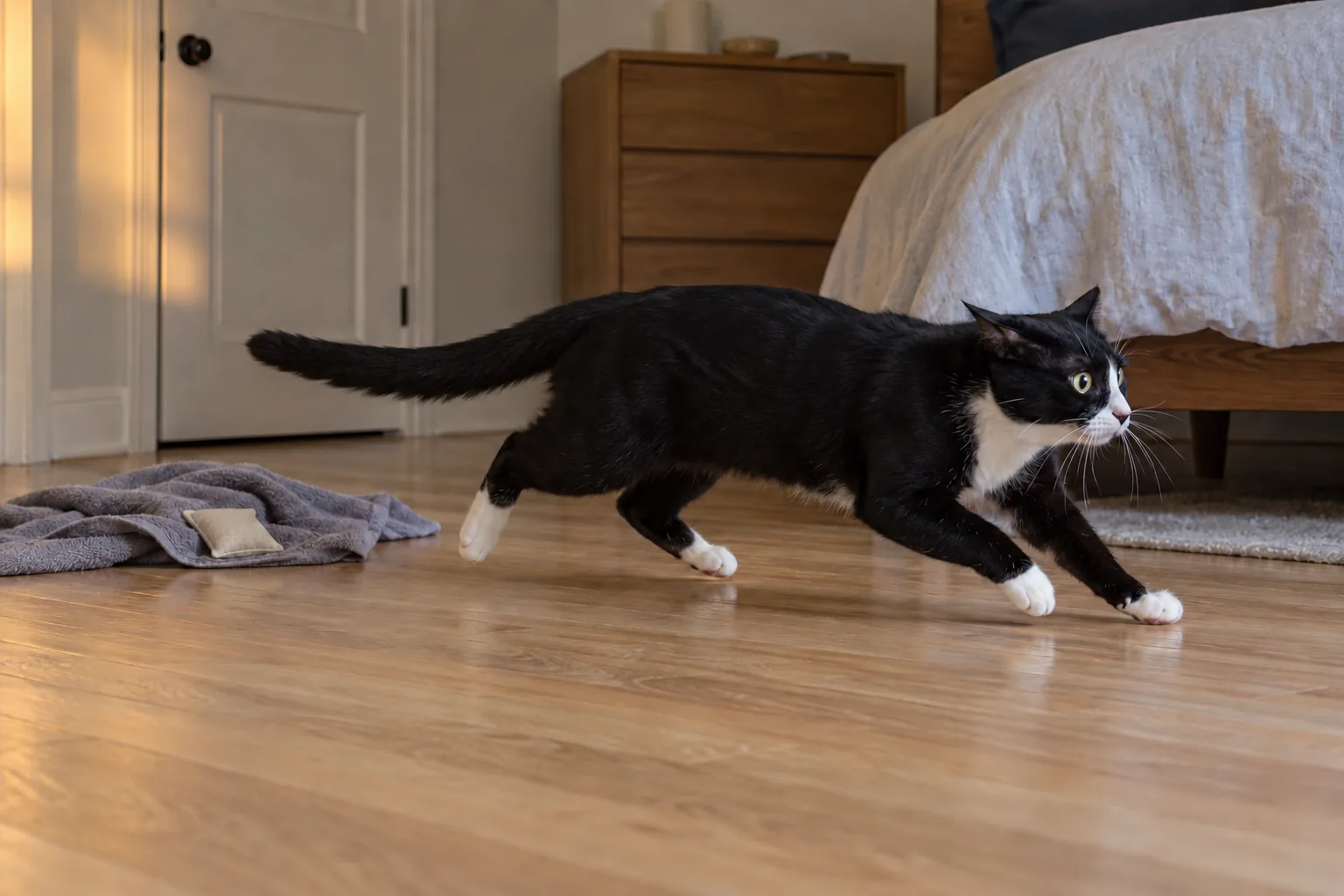
Mood can go either way. The ASPCA notes that catnip leaves some cats sedated and others stimulated. Watch the first session closely, because a cat that melts onto the towel and one that tears laps around the bed need different spots and different hours.
Given a free choice, cats seem to favor matatabi. A small 2026 study by Reiko Uenoyama and colleagues at Iwate University found free-roaming cats rarely rubbed and rolled on intact catnip plants, yet engaged with the vine again and again. Captive cats offered both extracts at once leaned the same way, though the catnip held plenty of its active compound.
One widely repeated figure needs a second look. VCA Animal Hospitals’ play page says about 50% of cats do not respond to catnip at all, and cites no study. In Bol’s group the share was nearer one cat in three, and only 6 of the 100 cats ignored all four plants; Tatarian honeysuckle wood and valerian root, the other two, drew 53% and 47%.
Very young kittens are the exception. International Cat Care says kittens under about three months do not respond to catnip, so offer it again once they are older. The three to six months you may see quoted is not backed by any vet or welfare source we read, and Bol’s study only took cats aged six months or more.
Safety: what the ASPCA and the researchers say
The ASPCA’s poison control entry rates catnip toxic to cats, and the concern it names is narrow: eaten, catnip can cause vomiting and diarrhea. Bol and colleagues note that catnip is generally believed to be neither addictive nor harmful. Both views hold once you separate a cat sniffing catnip from a cat swallowing a mouthful.
Actinidia polygama does not appear on the ASPCA’s plant list at all, which leaves it unrated there rather than cleared. One rule covers both plants: small amounts, now and then, with the rest sealed away between sessions.
Lock up the stash. A cat that tears into an open pouch can swallow far more than you would ever set out, and eating is the part the ASPCA warns about. Keep loose catnip, galls and scented toys sealed behind a door. Scented toys on a string or wand go behind that door too after play, as the AAFP and ISFM advise for string toys; if you spot string in a cat’s mouth, the Merck Veterinary Manual says not to pull it.
Offering either plant in one small room
A cat on catnip uses floor, not furniture, so choose the spot before the jar opens:
- Pick a room with a door you can close, such as the bedroom, or the bathroom with the toilet lid down.
- Shut the window. Spread the towel an arm’s length or more from shelves, glassware and the top of any stairs or loft ladder.
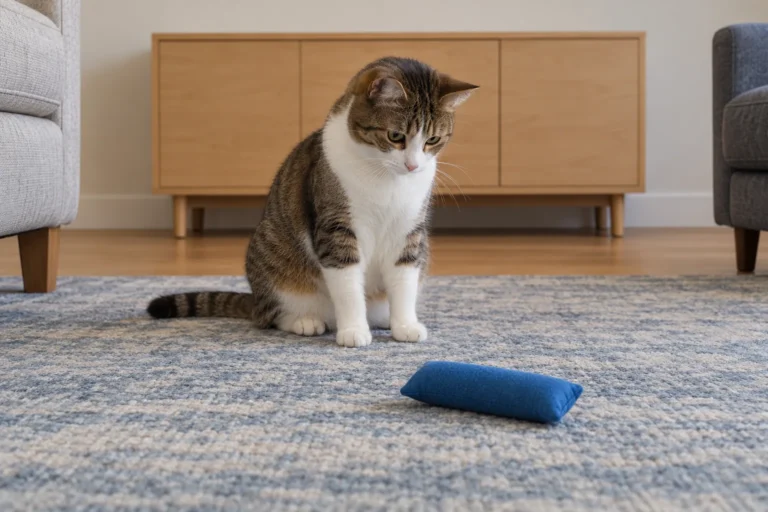
- Rub a little catnip or gall powder into the towel or a fabric toy, then step back.
- Stay and watch. A cat that melts can stay put; a sprinter gets the kicker to grab.
- Fold the towel and the toy into the jar when you want the session over.
Keep it all at floor level. A cat rolling on its back on the top platform of a cat tree or a loft bed is one twist from a fall. A sprint that starts at the top of a walk-up’s stairs can end at the bottom.
Scent is one item in a varied week, not the main event. The 7-day enrichment plan builder spaces scent sessions between wand play and food puzzles, and the toys for bored cats guide shows how to rotate the rest.
Storing catnip where a cat cannot raid it
A paper pouch on an open shelf is an invitation. Decant catnip or gall powder into a glass jar with a screw lid and keep the jar behind a cupboard door. If your cat has learned to paw open low cabinets, use a high one or fit a childproof latch.
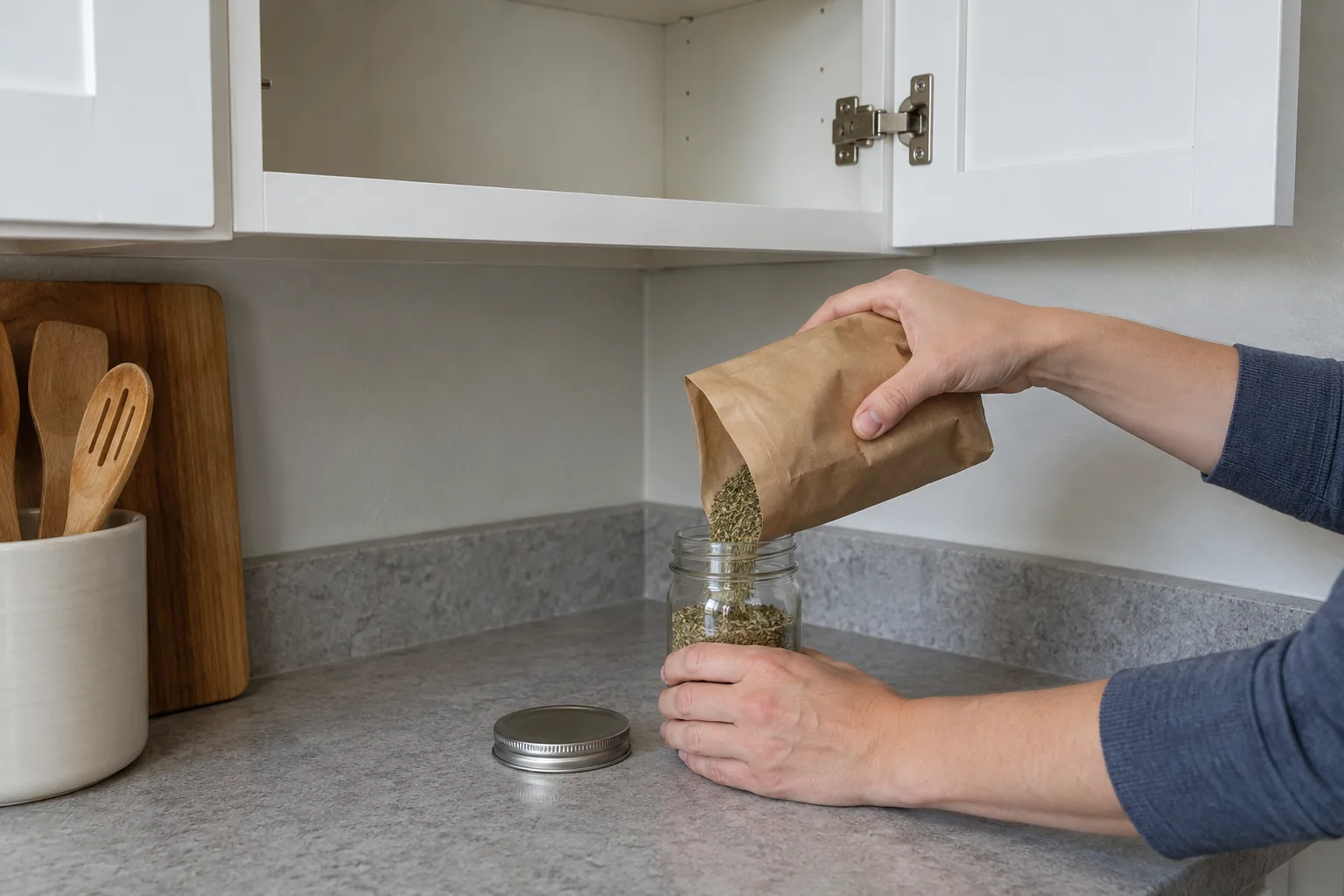
In a studio the kitchen may hold the only doors you have, and a high cabinet away from the stove does the job. International Cat Care suggests storing favorite toys in a bag with some catnip so they keep a cat’s interest, and one jar can serve both purposes.
No source we read gives a shelf life for opened catnip or gall powder. Write the date on the lid when you open a pack. If a cat that used to roll starts sniffing and walking off, a fresh pack is a cheap way to learn whether age was the reason.
Two cats in a small apartment
Give each cat its own session. On one towel in a small bedroom, one cat’s sprint can land on the other, and the AAFP and ISFM guidelines count separate key resources among the five pillars of a healthy cat home. Treat scent time as one of those resources. Shut the second cat in another room with a meal or a puzzle feeder, then swap.
Expect the two to differ. With odds of 68% for catnip and 79% for the galls, a pair may well split, one rolling and one wandering away. Offer the bystander the other plant on a separate day. If one cat is new to your home, finish the introductions first, using the steps in the 3-3-3 rule guide.
When to call for help. A cat that has eaten a large amount of catnip, keeps vomiting after a session or a chewed stick, or has chewed a plant you cannot identify needs a call to your vet or a pet poison helpline right away. Do not wait to see whether it passes.
Evenings, shared walls and the neighbor below
A cat galloping across a hardwood floor is a thud that carries through a ceiling. If someone lives below you, hold sessions in the early evening rather than late at night, and lay a folded rug under the towel.
Your first session tells you which kind of cat you have. A roller that turns drowsy, the sedated end of the ASPCA’s description, can have its scent time at bedtime. A sprinter’s slot is just before dinner, so the run ends at the food bowl.
Questions about catnip for cats
Is silvervine stronger than catnip?
More cats respond to it, which is usually what people mean. In Bol’s 2017 study, 79 of every 100 cats reacted to the gall powder against 68 for catnip, and the 2026 Iwate University work found cats preferred it for rubbing and rolling. How hard one particular cat reacts is personal, so offer each on a different day.
How much silvervine can you give a cat?
No source we read sets an amount for it, and the ASPCA gives none for catnip either. A small amount now and then, rubbed into a towel or toy rather than added to food, keeps you within what the sources support. Seal the rest away, and call a vet if your cat vomits more than once.
What is gall fruit for cats?
Gall fruit is fruit of the matatabi vine that swelled into a lumpy shape while gall midge larvae lived inside it. Dried and ground, these galls are what most cats in the 2017 study responded to, far more than the ordinary fruit or the wood. Packs labeled gall powder or fruit galls are the ones to look for.
Do silvervine sticks work as well as the powder?
Usually not. The sticks are cut from the vine’s wood, which drew few reactions in the 2017 study compared with gall powder. A stick can still serve as a chew toy. Take it away once it is chewed short enough to swallow, and skip any pack that promises cleaner teeth, since no vet source we read backs that.
Can you offer catnip in a studio with no spare room?
You can, by turning one patch of floor into the session spot. Clear away anything that tips over, close the bathroom and closet doors so a sprint has nowhere to vanish, and lay the towel well clear of the kitchen counter and any loft ladder. Afterward, the towel goes straight into its jar, so the scent stays put away.
Will a catnip session bother the neighbors below?
It might, if your cat sprints rather than rolls. Thumps from a running cat travel through floors, so pick an early evening slot and pad the play area with a folded rug. A cat that only goes limp and rubs its cheeks on the towel makes almost no sound. Let the first session decide.
Next step. For play beyond a scent session, compare puzzle feeders.
Sources
- Bol and others, “Responsiveness of cats to silver vine, Tatarian honeysuckle, valerian and catnip,” BMC Veterinary Research, 2017, PubMed Central, read Oct 16, 2026.
- Uenoyama and others, “Free-Roaming and Captive Cats Prefer Silver Vine to Catnip for Self-Anointing,” Journal of Chemical Ecology, 2026, PubMed Central, read Oct 16, 2026.
- ASPCA Animal Poison Control, “Toxic and Non-toxic Plants: Catnip,” aspca.org, read Oct 16, 2026.
- International Cat Care, “Playing with your cat,” icatcare.org, read Oct 16, 2026.
- VCA Animal Hospitals, “Cat Behavior and Training: Play and Play Toys,” vcahospitals.com, read Oct 16, 2026.
- AAFP and ISFM, “Feline Environmental Needs Guidelines,” Journal of Feline Medicine and Surgery, 2013, journals.sagepub.com, read Oct 16, 2026.
- Merck Veterinary Manual, “Gastrointestinal Obstruction in Small Animals,” merckvetmanual.com, read Oct 16, 2026.