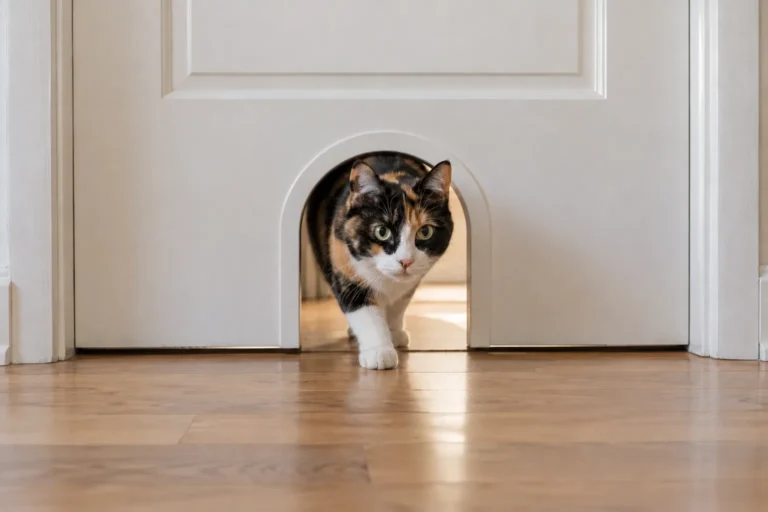
Cat-proofing an apartment means closing the openings a cat could fall through and putting away what it could chew or swallow. Walk the rooms in the order below, then agree one door and laundry routine with everyone who shares your home.
What you need
- A note on your phone for hazards you cannot fix yourself, with photos to send management.
- Closed storage for small objects, medicines and household chemicals.
- Cable clips or a cable tidy. In a rental, choose ones that come off without marking the paint.
- An interior room with a door for deliveries or maintenance visits.
- Your vet’s number and a pet poison control number, kept where everyone in the home can find them.
Start with whatever your cat can reach today. Shut the door or window first and choose the permanent fix afterward. A tidy room still needs a look behind furniture and inside low cupboards.
Key takeaways
- Keep any window with a doubtful screen shut until management fixes it, even on a low floor. → check openings
- Clip or store every cable, including the charger beside the couch. → contain cords
- Medicines, skin gels and minoxidil go in a closed cupboard, never on the sink. → bathroom
- Find your cat before either laundry machine starts, as Cats Protection advises. → laundry routine
- No true lilies or daylilies: the FDA counts their pollen and vase water as toxic. → flowers and plants
On this page: Plan the first cat-proofing apartment pass · Windows and the apartment balcony · Living room and home office · Kitchen and food storage · Bathroom and medicine storage · Check every laundry load · Plants, flowers and visitors · Make the shared-home routine repeatable
1. Plan the first cat-proofing apartment pass
Walk a route from the front door through every room you use and keep two lists: repairs that need management, and things you can put away tonight. Keeping them apart stops a torn screen from getting lost among storage errands.
The ASPCA moving guide gives the core list for a new home: tuck away electrical cords, plug up nooks where a pet could get stuck, make sure every window has a secure screen, remove poisonous houseplants, and confirm that no pest-control poison traps were left anywhere. That last item is the one renters miss. Before your cat explores, look under the sink and behind the fridge and stove, and ask management whether the unit has had pest treatment.
If you cannot finish an area, shut it off from your cat while you work. For a newly adopted cat, follow the small-home arrival checklist rather than opening every room on day one. A closed door often solves access without another accessory.
2. Windows and the apartment balcony
To cat proof apartment windows, check every one, the small bathroom window included, before you plan a perch. The ASPCA’s high-rise advice asks for snug, sturdy screens in all windows, and says adjustable screens should be tightly wedged into the frame. It also warns against relying on childproof window guards, because cats can slip through them.
A low floor does not make an open window safe. The ASPCA notes that cats in one- or two-story buildings are still at risk, partly because a short fall leaves too little time to turn and land well. Tilt windows, which open at the top, bring a different danger: Cats Protection warns they can trap a cat that tries to squeeze through. Keep them locked, or open only to a gap your cat cannot fit.
Inspect the frame as well as the mesh. Look for loose corners, torn material or a frame that no longer seats. If anything is uncertain, keep the window closed and send management a photo of the defect. Never use your cat to test a barrier.
Cat-proof blinds are cordless. No source we read covers blind cords and cats, but a dangling cord is like the string toys VCA says to put away, so wind cords out of reach or ask about cordless blinds.
Window warning: A window open a few inches is still an opening. If your cat does fall, the ASPCA says to find them immediately and take them to the nearest animal hospital or your own vet.
For cat proofing an apartment balcony, decide whether a complete enclosure is possible before your cat goes out at all. Humane World for Animals advises renters to get the landlord’s or management company’s agreement before adding a balcony catio; depending on the city or homeowners association, a permit may also be needed. Keep the written answer with the installation instructions.
Without permission, keep the balcony door shut and make an indoor viewing spot instead; compact cat trees covers freestanding options. Do not tie netting to shared railings on a guess. Load ratings and anchor points for your building have to come from the installer and management, not from a checklist.
3. Living room and home office
Trace each cable from the device to the outlet, including the charger left by the couch. Cats Protection points out that sharp teeth and claws can get through a wire, and suggests cable tidies and clips to keep cables out of reach. Cornell’s page on destructive behavior puts electrical cords among the dangerous items a fabric-chewing cat may also go for. Unplug and store any charger you are not using.
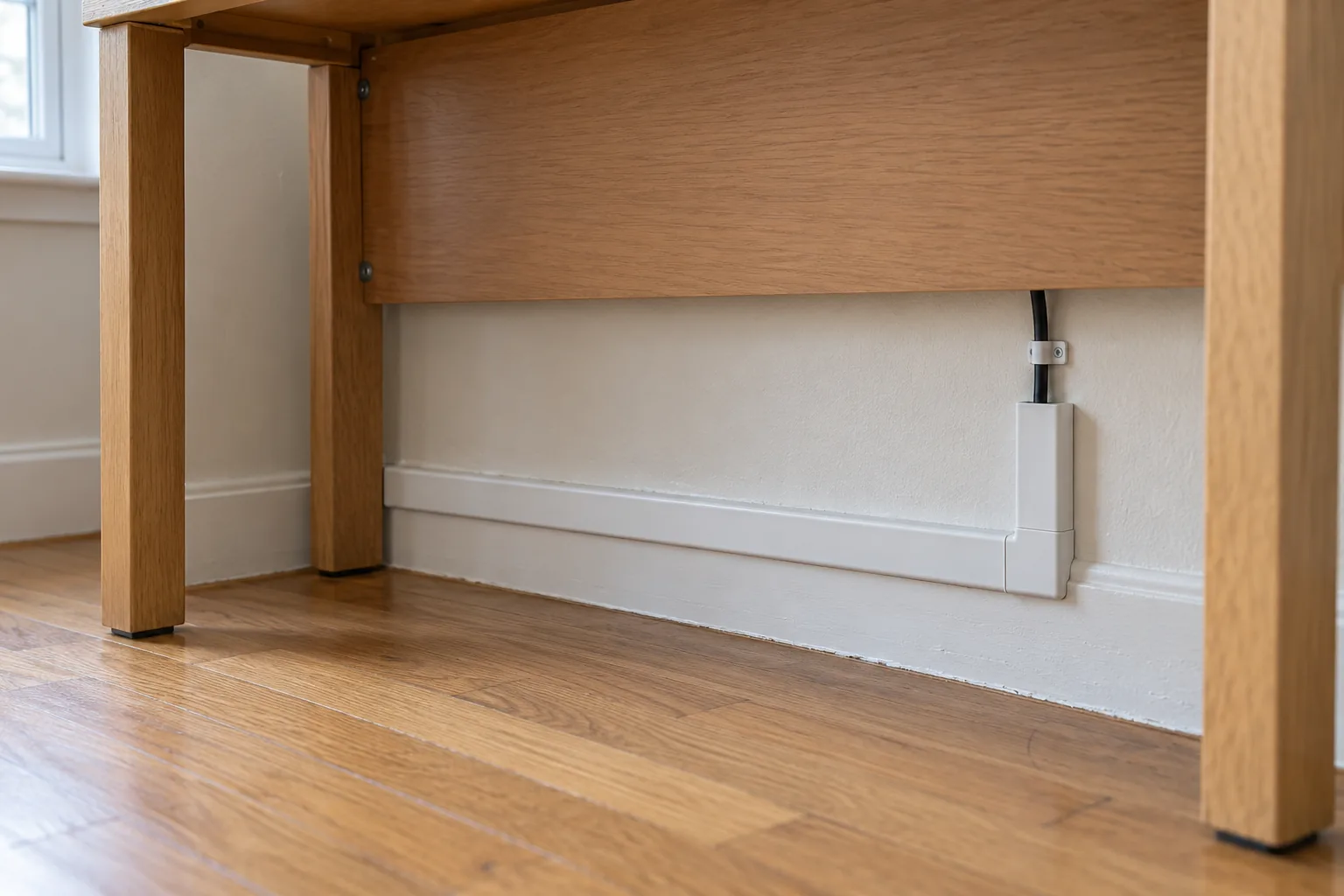
Recheck the run after you move the desk chair or vacuum. A neat bundle still counts if a paw can reach it.
Sewing kits, gift ribbon and twist ties need a box with a lid. Cornell names twist ties, pins and needles among the dangerous things a fabric chewer may take, and swallowed string, thread or ribbon can be deadly. Batteries belong in the same box, since Cats Protection notes that cats could easily swallow the smaller ones.
Own a recliner or a sofa bed? Look underneath for your cat every time before you push it closed; Cats Protection lists reclining chairs among household hazards.
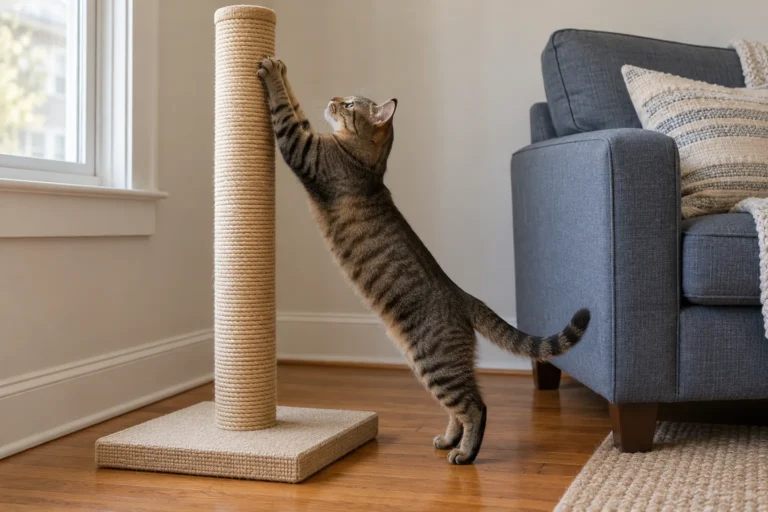
Leave a scratching surface your cat is allowed to use. Cornell describes scratching as largely a marking behavior that leaves scent from glands in the paws, so guarding the couch should come with somewhere else to scratch. The scratching-post guide covers that choice.
4. Kitchen and food storage
Clear the counter before you leave the kitchen, then check the floor beneath it. Wrappers go in a cat-proof trash can, with a latching lid or behind a cabinet door, since trash holds string, rubber bands and hair ties, swallowing hazards to VCA and Cats Protection. Cleaning products, insect killers and any rodent bait go in a cupboard your cat cannot open, which is where Cats Protection says antifreeze and pest poisons belong.
The ASPCA says most cleaning products are safe around cats as long as they are used per their labeled directions. So keep each product in its original bottle, where the next person to clean can read the label. A homemade spray in an unmarked bottle gives nobody those directions.
With few cupboards, give the closed space to chemicals and move everyday dishes to open shelves. If a door needs a latch, check that it shuts fully and that your lease allows one.
Before maintenance, clear the cabinet the worker needs and settle your cat somewhere else. Tell the worker which interior door must stay closed. Do this before the toolbox opens, especially when the kitchen leads straight into the living area with no hallway door between them.
5. Bathroom and medicine storage
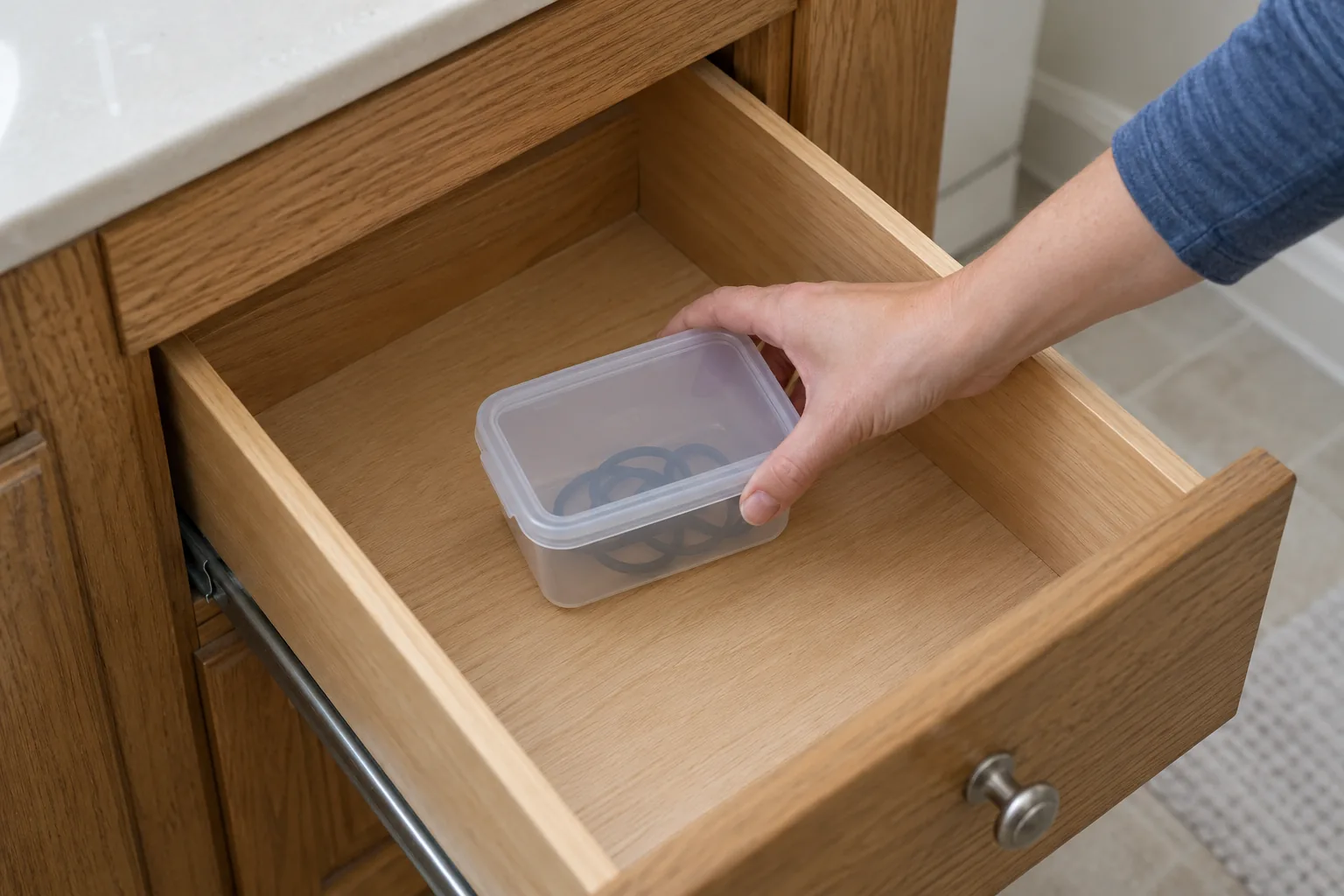
Use a closed drawer for hair ties and rubber bands rather than a dish by the sink. Cats Protection warns that a swallowed band can get stuck in a cat’s stomach. Makeup packaging belongs in the same drawer: the ASPCA notes that swallowed cosmetic packaging can block the stomach or intestines, a medical emergency.
Medicines need a cupboard with a door. Cats Protection lists anti-inflammatory gels such as ibuprofen, hormone replacement gels and some psoriasis and skin cancer creams as poisonous to cats, and says not to let your cat lick a gel or cream from your skin.
Hair-loss treatments with minoxidil need their own routine. Cats Protection says poisoning can happen when a cat licks freshly applied product from skin, residue from hair, or a pillowcase. Apply it away from your cat, wash your hands, and let it dry fully before contact. If you apply it at bedtime, change the pillowcase. Store the bottle securely and throw used applicators away.
If the litter box lives in the bathroom, wedge the door so it cannot swing shut on your cat, and pick a second spot before you close the room for cleaning or a repair.
6. Check every laundry load
Make the machine check part of loading, not a task you hope the previous person completed. Cats Protection says to keep washer and dryer doors closed and to double check for your cat before either one starts. Look inside the drum and find your cat before you press a control.
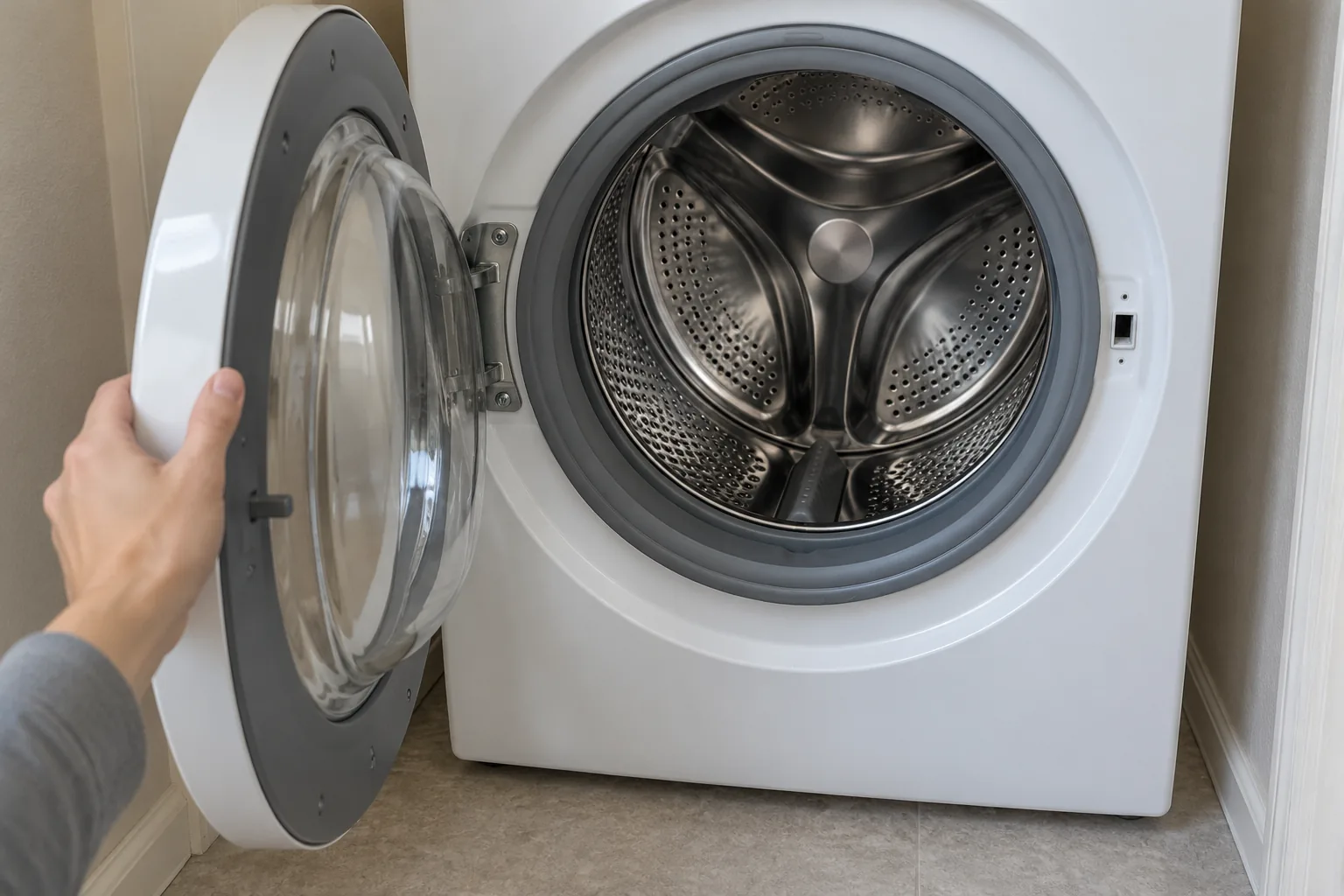
A shared laundry closet needs a shared habit. Finish loading, check the drum, close the door and account for your cat. If someone adds a forgotten sock, repeat the check. Guests can leave the laundry to you until they know the routine.
Keep dryer sheets behind a closed door with the rest of the laundry supplies, and bin the used ones you pull from clothes. The ASPCA household products guide warns that the cationic detergents in dryer sheets, unused ones especially, can burn the mouth and stomach badly enough to leave ulcers. Swallowed whole, a sheet can also block the intestines. Most fabric softeners carry the same detergents, and detergent pods can irritate the mouth and stomach. A shelf above the washer is not closed storage.
If the appliance manual says to leave the door open to dry after use, keep your cat out of that room for the time it stands open. In a laundry nook with no door, ask management how you may close the area off.
7. Plants, flowers and visitors
Check a plant’s scientific name against the ASPCA list of toxic and non-toxic plants for cats before it comes into the apartment. A common name or a decorative tag is not enough. For a bouquet with unknown contents, decline it or keep it out of reach until you know what is in it.
True lilies and daylilies do not belong in a cat household. The FDA lily warning says every part of the plant is toxic, pollen and vase water included. Tell visitors beforehand that flowers need checking, rather than trying to identify a surprise arrangement while holding the door open.
Possible poisoning: If your cat may have eaten part of a lily, licked its pollen or drunk the vase water, the FDA says to call your vet or a pet poison control center immediately, and to bring the plant if you can. The ASPCA gives the same advice for any suspected poison.
You do not need to replace a removed plant. Leave the spot empty while you decide, and keep the label or packaging of anything questionable for the vet instead of trying a home treatment.
8. Make the shared-home routine repeatable
Choose an explicit handoff for the apartment entrance. Before a furniture delivery or a move, put your cat behind a closed interior door with water and a litter box. On moving day the ASPCA recommends keeping pets in a room with the door shut. Agree who checks the cat before anyone opens that room again.
- Entrance: agree who handles the outer door during deliveries.
- Living area: return cables and project materials to their storage.
- Kitchen and bathroom: finish with closed cupboards and cleared surfaces.
- Laundry: check inside and locate your cat before starting.
- Windows: leave unresolved openings shut and send repair requests.
Use the space-fit planner when a new storage unit changes your walking route. Record the remaining repair, the person responsible and the temporary restriction. For roommates, a specific task such as checking the dryer is easier to hand over than asking everyone to be careful.
Cat-proofing questions
Is an adjustable window screen safe for a cat?
Only when it sits tight in the frame. The ASPCA says adjustable screens should be wedged firmly into the window frame, so press each corner and both sides yourself. A screen that shifts or bows outward is not ready for a cat. Keep that window closed and ask management for a fitted screen.
Can a cat use the apartment balcony if I supervise?
Plan an enclosure before treating the balcony as cat space. Supervision does not close an opening. Humane World recommends consulting your landlord before building a balcony catio in a rental. While permission and installation remain unresolved, use the balcony yourself with the cat indoors and its access door securely closed.
How do roommates share one laundry closet responsibly?
Assign the check to whoever starts the appliance, even if another person loaded it. That person inspects the drum and locates the cat before starting, following Cats Protection guidance. Repeat the process after reopening the machine; an earlier check cannot account for what happened while the door stood open.
What can I do while waiting for a rental repair?
Restrict the affected area and send management a clear photo with the location of the problem. For an uncertain screen, keep that window shut. Store portable hazards elsewhere while you wait. Choose an interior room for your cat before workers arrive, then agree who controls the apartment entrance.
Next step. Compare interior cat doors for rentals.
Sources
- ASPCA, Moving With Your Pet, read Oct 21, 2026.
- ASPCA, High-Rise Syndrome: Lifesaving Tips for Cat Parents, read Oct 22, 2026.
- Cats Protection, Keeping Your Cat Safe in The Home, read Oct 22, 2026.
- Cornell Feline Health Center, Feline Behavior Problems: Destructive Behavior, read Oct 21, 2026.
- ASPCA, Poisonous Household Products, read Oct 21, 2026.
- ASPCA, Toxic and Non-Toxic Plants: Cats, read Oct 21, 2026.
- FDA, Lovely Lilies and Curious Cats: A Dangerous Combination, read Oct 21, 2026.
- Humane World for Animals, Catios: Safe Outdoor Enclosures for Cats, read Oct 21, 2026.
- VCA Animal Hospitals, Linear foreign body in cats, read Oct 16, 2026.